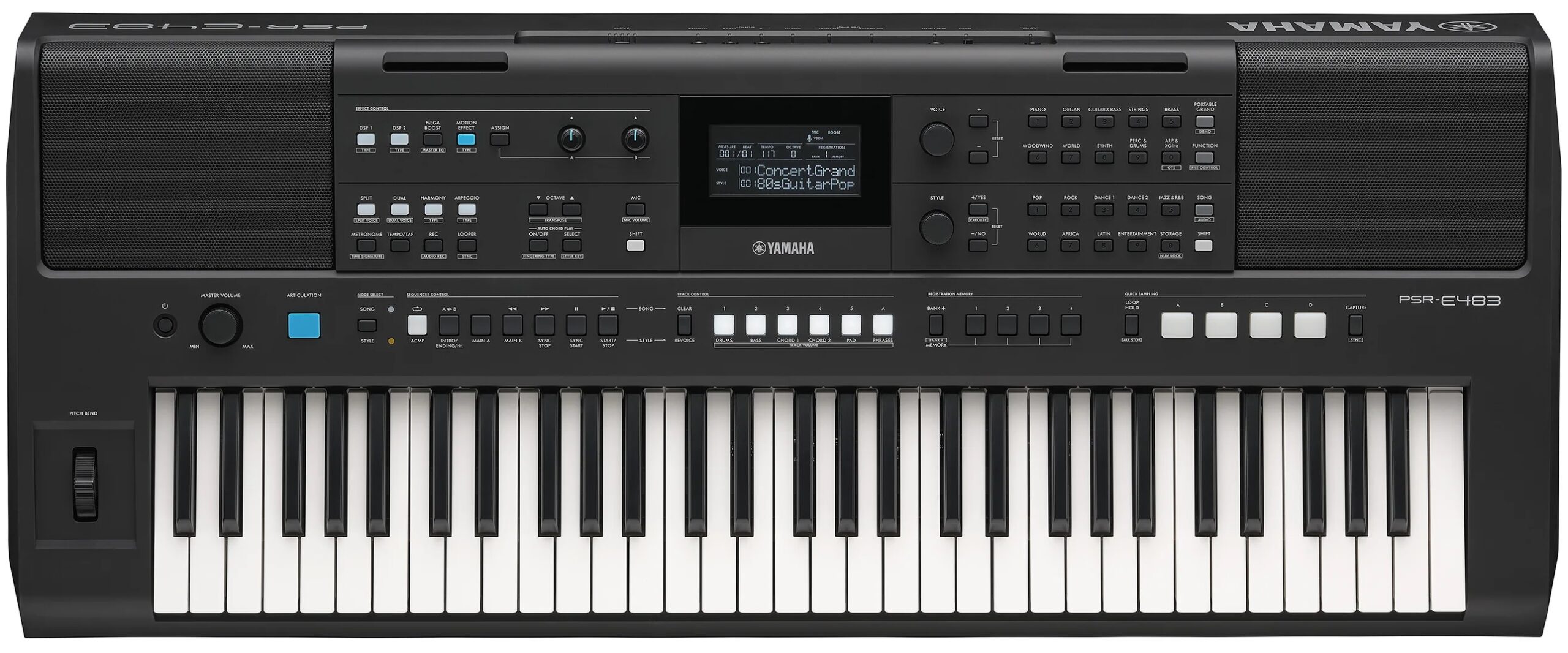
Yamaha PSR-I510 and PSR-I610 keyboards

Yamaha sent the PSR-E583 and PSR-E583 to India to find themselves. Like the Beatles, they came back changed.

You must check the PSR-I510 and PSR-I610 introductory video. Holy mother of funk! 🙂 Damn, I want more of that. More Indian demo tones.

The overview video with Karthick Devaraj has some sweet moments, too. [Dude can play.] Could you imagine if we had this ting during the 60s? Let me hear your sitars ringing out!

Yeah, yeah, I know. This is cultural appropriation on my part. 🙂

Now the PSR-I510 and PSR-I610 plug:

  • 887+ Voices, including 40+ Indian Voices
  • 382+ types of auto accompaniment Styles, including 60+ Indian Styles
  • 40+ Riyaz (Tabla/Mridangam & Tanpura) patterns
  • 65+ Songs, including 25+ Indian Songs
  • PSR-I510: 2×6 Watts; PSR-I610 2×12 Watts
  • Pitch bend wheel
  • Modulation wheel (PSR-I610 only)
  • Looper recording
  • Auto Chord Play
  • USB to Host (Type C), LINE OUT, MIC IN

Some of the Indian voices are Super Articulation Lite, e.g., S.Art Lite Santoor, Swarmandal. My friend Bharadwaj will be happy to see the Riyaz patterns.

This is the first time I had fun listening to demos all week.

Yamaha Global have posted a new MIDI Song to Style introduction video.

Copyright © 2026 Paul J. Drongowski

NAMM 2026: For those who wait

Interesting products are still streaming out from NAMM 2026.

Hammond XK-7/XK-7D organ

As teased, Hammond Suzuki have a new top-of-the-line flagship — the XK-7D.

  • Multi-contact keyboard (6 physical contacts below each key)
  • New XPK-250W mk3 pedal board (3 contact system)
  • Four sets of harmonic drawbars
  • Touch response percussion with vintage response
  • Updated Leslie speaker models
  • Half-moon Leslie control switch
  • Enhanced combo organ division (Acetone, Farfisa, Vox)
  • Enhanced pipe organ division (Classical and Theatre)

Listening to the demo, the XK-7D can get pretty snarly. Demo sounds nice although, when is the internal speaker sim engaged versus the external Leslie speaker? What’s live? What’s sim? Modeski will like the crazy effects.
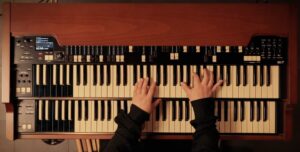
Hammond XK-7D organ (NAMM 2026)

Tain’t cheap or light. The single manual XK-7 organ is $4,925 USD (39.6 pounds). The two manual XK-7D is $7,295 (68.3 pounds).

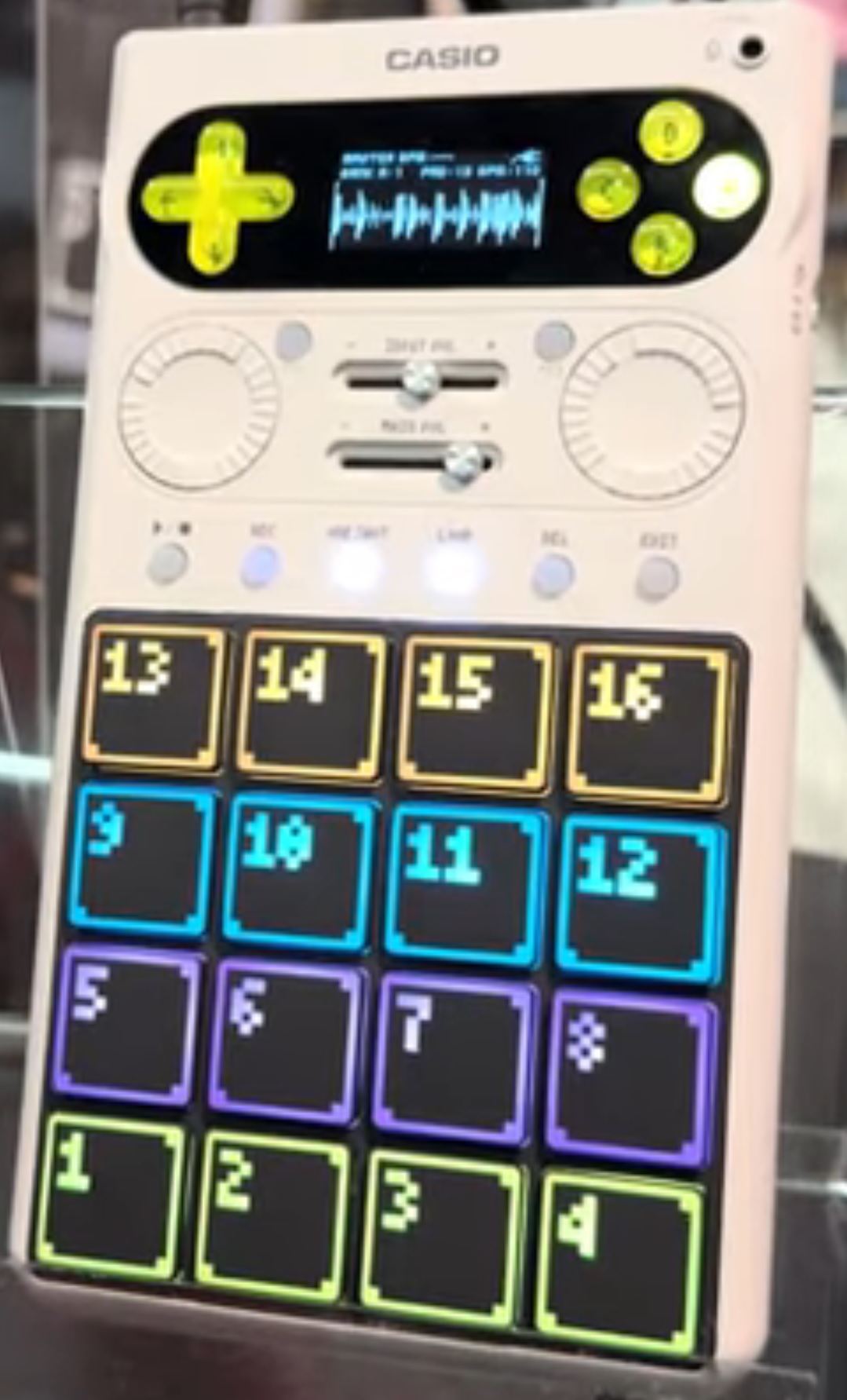
Casio sampler SXC1 (preview)

[Update] The Casio sampler has a name: SXC1.
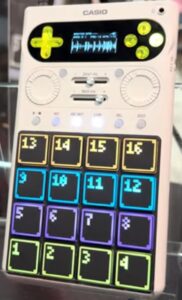
Casio SXC1 sampler (NAMM 2026)

Casio are previewing a prototype stand-alone sampler. The sampler looks like a handheld retro game with a 4×4 matrix of playable pads. Preliminary specs:

  • Sixteen pads (selectable backlight color)
  • Two rotary dials
  • 16 voices
  • Built-in sequencer
  • 16-bit 48kHz sampling (WAV format)
  • 64GByte internal memory
  • Ten banks with 16 samples per bank
  • 1.3 inch OLED display
  • Built-in microphone
  • Built-in speaker
  • Audio input, main audio output, headphone socket
  • Two USB Type-C ports (one data, one power/data)
  • Battery power (AAA)

Nothing else known about it except having “classic Casio sounds” in the factory content.

JBL Bandbox Solo and Trio

Upfront, let me state, I am an AI skeptic. I’ve seen too much Silly-con Valley hype over five decades… However! AI-based stem separation does work.

Riding the hype wave, JBL have incorporated AI-based stem separation into the new JBL BandBox SOLO and JBL BandBox TRIO portable speakers. It’s a new take on vocal suppression, separating audio into vocal and instrumental stems, letting you dial the stems in or out during playback. Both models also offer digital effects.
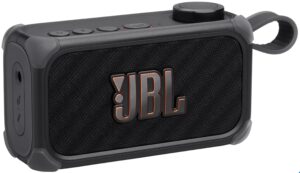
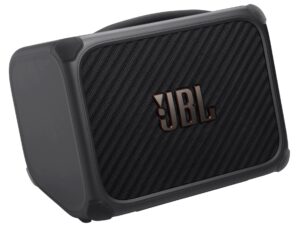
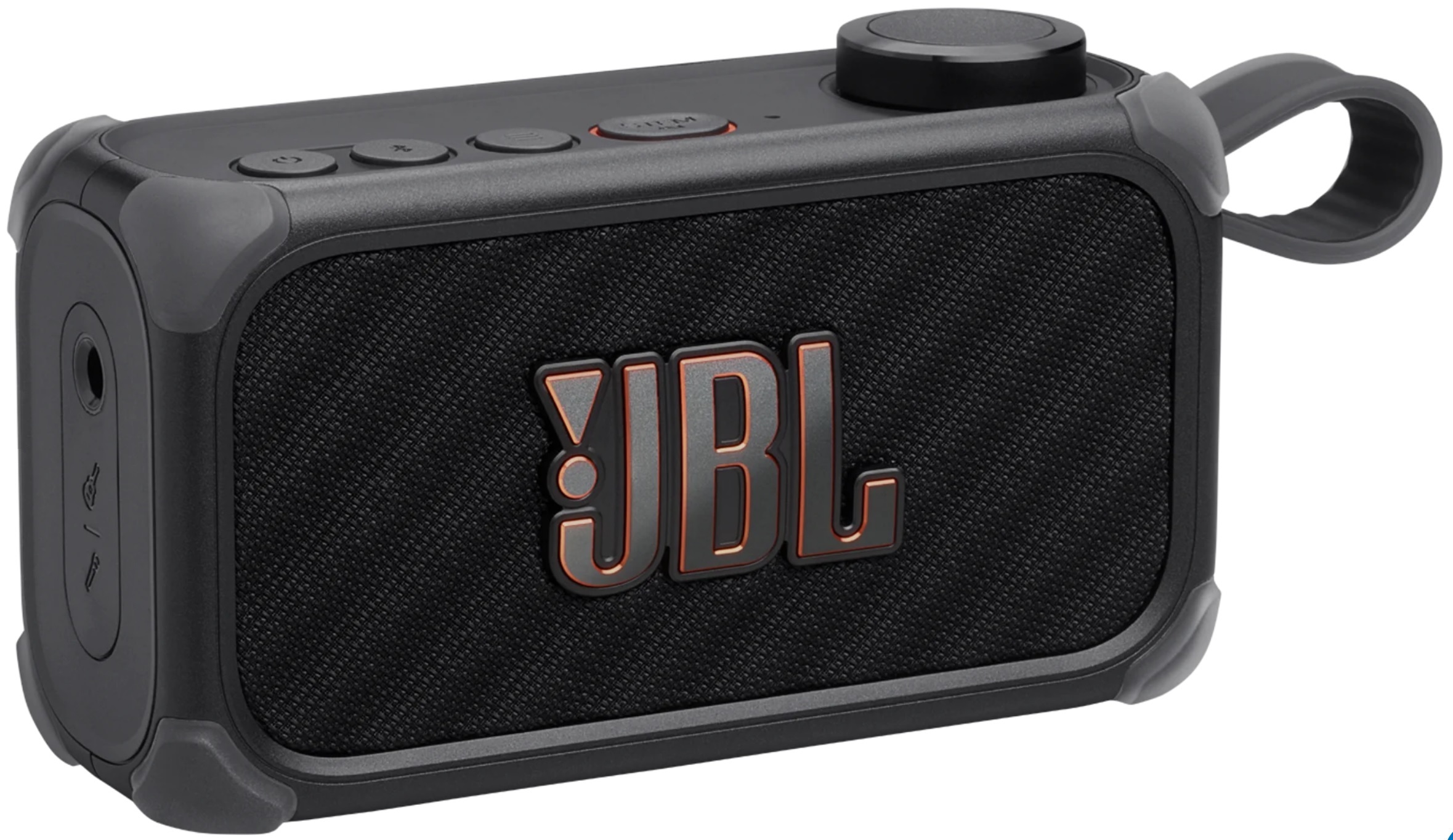
JBL BandBox SOLO (NAMM 2026)

The JBL BandBox SOLO is essentially a little Bluetooth boom box with smarts. Whatcha get:

  • 30 Watts
  • Single 2.25 inch full-range speaker, 73Hz to 20kHz (-6 dB)
  • Bluetooth and USB (type C) connectivity
  • 60 second digital looper (with overdubbing)
  • Metronome, tuner
  • 1/4″ input with MIC and guitar modes
  • 3.5mm headphone output
  • Rechargeable Li-ion battery (6 hours playing time)
  • JBL One app control
  • 4.25″ H x 8.31″ W x 3.07″ D
  • 1.72 pounds

The JBL BandBox SOLO streets at $250 USD.

I’ve successfully used small Bluetooth speakers like the Bose SoundLink Color II as throw-in-the-bag personal monitors. It’s difficult to get a non-boxy speaker this small, however, so we will need to wait, see and hear. EQ presets (Musician Type) are Singing Guitarist, Guitarist and Singer — no “Keyboardist” and, thus, I’m nervous.
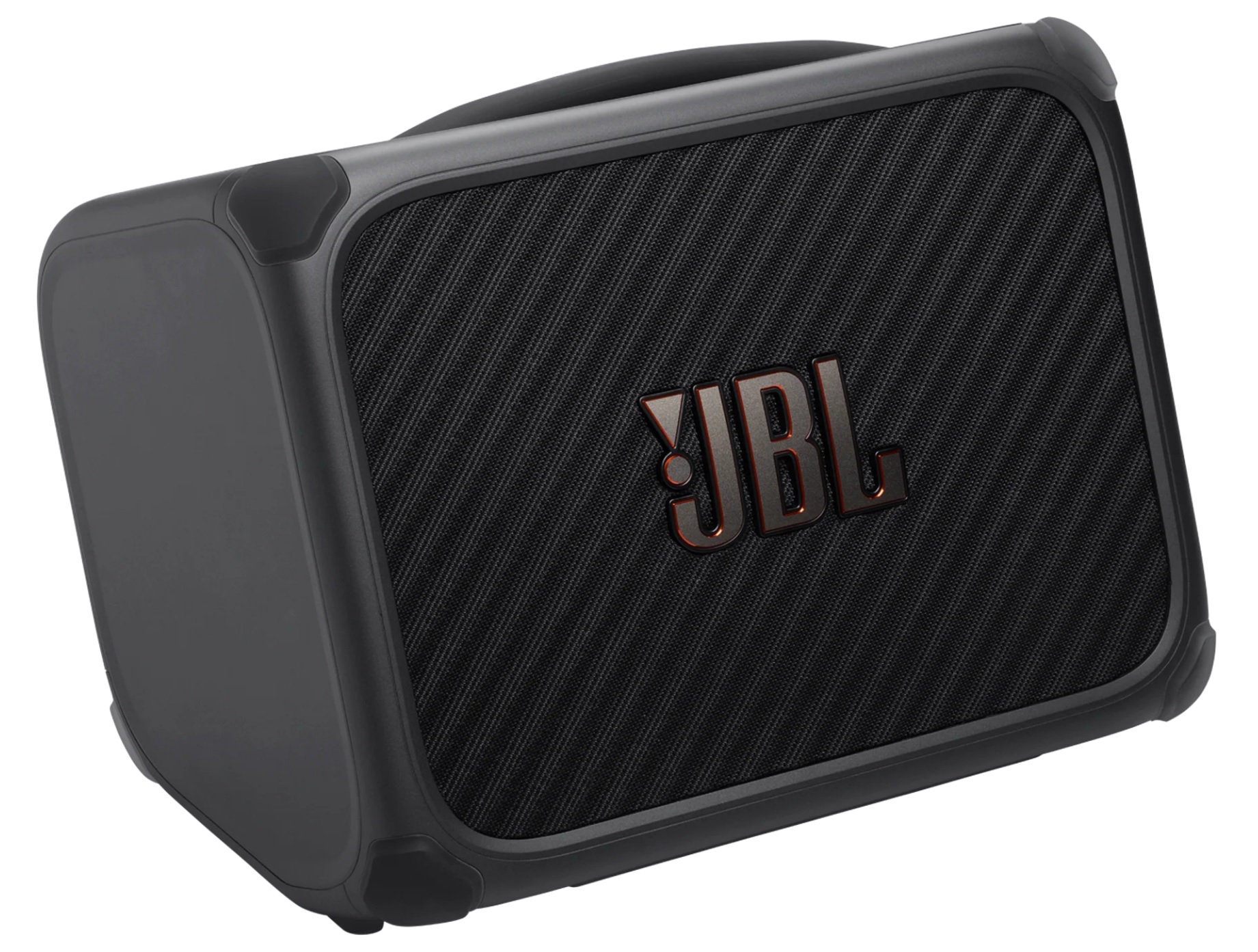
JBL BandBox TRIO (NAMM 2026)

The JBL BandBox TRIO is, of course, the bigger sibling.

  • Separates vocals, drums and guitar in real time
  • 135 Watts
  • One 6.5″ woofer and two 1″ tweeters, 50Hz to 20kHz (-6 dB)
  • Four channel mixer
  • Top-mounted LCD display
  • Bluetooth and USB (type C) connectivity
  • 60 second digital looper (with overdubbing)
  • Metronome, tuner
  • GTR 1/4″ input, two XLR-1/4″ combo, 1/8″ AUX input
  • 3.5mm headphone and 1/4″ pass THRU outputs
  • Rechargeable Li-ion battery (10 hours playing time)
  • JBL One app control
  • 10.43″ H x 13.54″ W x 8.98″ D
  • 14.68 pounds

The JBL BandBox TRIO sells for $600 USD (MAP).

The TRIO is a serious beast. At almost 15 pounds, it’s a bruiser. Ain’t gonna sling this one into your gig bag. Still, one expects much better fidelity through its sound system than the super-portable SOLO.

Copyright © 2026 Paul J. Drongowski

NAMM 2026: Long boards

Thank goodness the actual NAMM 2026 exhibition begins tomorrow! New keyboard stuff has been flowing like a river.

Today’s additions are long boards for the stage.

Kurzweil SP8 Stage Keyboard

Kurzweil Music Systems are introducing the SP8 Stage Keyboard. The SP8 joins a long line of 88-key Kurzweil stage keyboards. Some of the basic specs:

  • 88-key fully weighted hammer-action keyboard
  • 2GBytes of factory sounds, 1000 factory programs, 200 Multis
  • 256 voice polyphony
  • German D and triple strike pianos with string resonance
  • 6-op FM synthesis
  • Vector synthesis waveforms and textures
  • Five zone MIDI controller

No price information yet. The comparable K2088 V.A.S.T. synthesizer streets for $3,000 USD.

Studiologic Numa X Piano GT SE

Put on your sunglasses. The Numa X Piano GT SE has a bright orange metallic finish and wooden sides. Aside from the AMC Gremlin orange paint job, Studiologic revised the sound engines (Studiologic TrS2). As usual, just the facts.

  • 88-key Fatar TP/400 wood hammer action keybed with escapement and aftertouch
  • 200 factory patches
  • 4GByte sample memory
  • Acoustic piano enhanced by physical modeling and new AP samples
  • Electric pianos graduate to Electric Modeling 2 (new tine sounds and amp simulation)
  • New virtual analog synth engine
  • 4 Zones assignable to internal sounds or external MIDI
  • Weight: 22,0 Kg / 48,5 pounds

No price information yet or availability. The plain old black non-SE model sells for $2,200 (MAP).

Roland Zenology GX for iPad

The core feature set of Roland Zenology GX is coming to Apple iPad. It is scheduled for “early 2026” release. [I guess Roland managament hasn’t learned to pin down its software developers.] You know it won’t be totally free, quoting Roland:

ZENOLOGY GX for iPad is scheduled for release as a free download with all features unlocked for a limited time. After the debut period ends, the instrument will be available through free and premium Roland Cloud memberships or a Lifetime Key purchase.

Copyright © 2026 Paul J. Drongowski
NAMM 2026: More little things

Stylophone On-The-Fly

Dubreq also teased a black box. It’s the Stylophone On-The-Fly “no menu diving” performance sequencer. On-The-Fly expands the CPM (Compact, Portable Modular) series (DS-2 synth, DF-2 analog filter).

  • 16-, 32- or 64-step sequences
  • Switchable directions: forward, reverse, bounce
  • 24 sequence memories
  • Hand-on control, real-time tweaking
  • Loop record performances up to 1024 steps
  • Eurorack-ready CV and gate

Who would have thought that Stylophone would steal Korg VOLCA’s game? I’ve still got my SQ-1 because of its immediacy.

No price announced. Join the wait list.

Roland GO:MIXER Studio

The Roland GO:MIXER product line marches on. Roland are adding the GO:MIXER Studio or “Content Creation Station” in marketing-speak.

  • Portable USB audio interface and mixer
  • Color display
  • Up to 24-bit 192kHz record and internal 32-bit float processing
  • Two XLR inputs
  • TRS line inputs and Hi-Z input for guitars
  • TRS line outputs for studio monitors and headphone output
  • MIDI input/output on minijacks
  • Built-in effects (compression, EQ, reverb)
  • Sixteen scenes

Roland clearly are coming for the Yamaha AG series. The user interface makes good use of the color display showing knob assignments, values, etc. [Beauty.] Even better, the GO:MIXER Studio has MIDI I/O (on 3.5mm jacks). The GO:MIXER Studio has a gazillion goes-in and goes-out, so check the specs at the Roland site.

Shouldn’t a mixer for the studio be called “STAY:MIXER”? Well, anyway, it’s small enough to throw in a back-pack. $300 USD street.

Casio Dimensions Shifter

Casio are pitching the Dimensions Shifter Wireless Expression Controller at guitarists. Attach a small transmitter to your guitar strap and it sends expression to a receiver on your pedal board (standard TRS EXP input).

I’m sure there are a zillion ways this thing can be abused by synthesists, keyboard players and wind controller people, too. $300 USD street.

Props to Casio for thinking outside of their usual box!

Copyright © 2026 Paul J. Drongowski
NAMM 2026: Hunting the snark

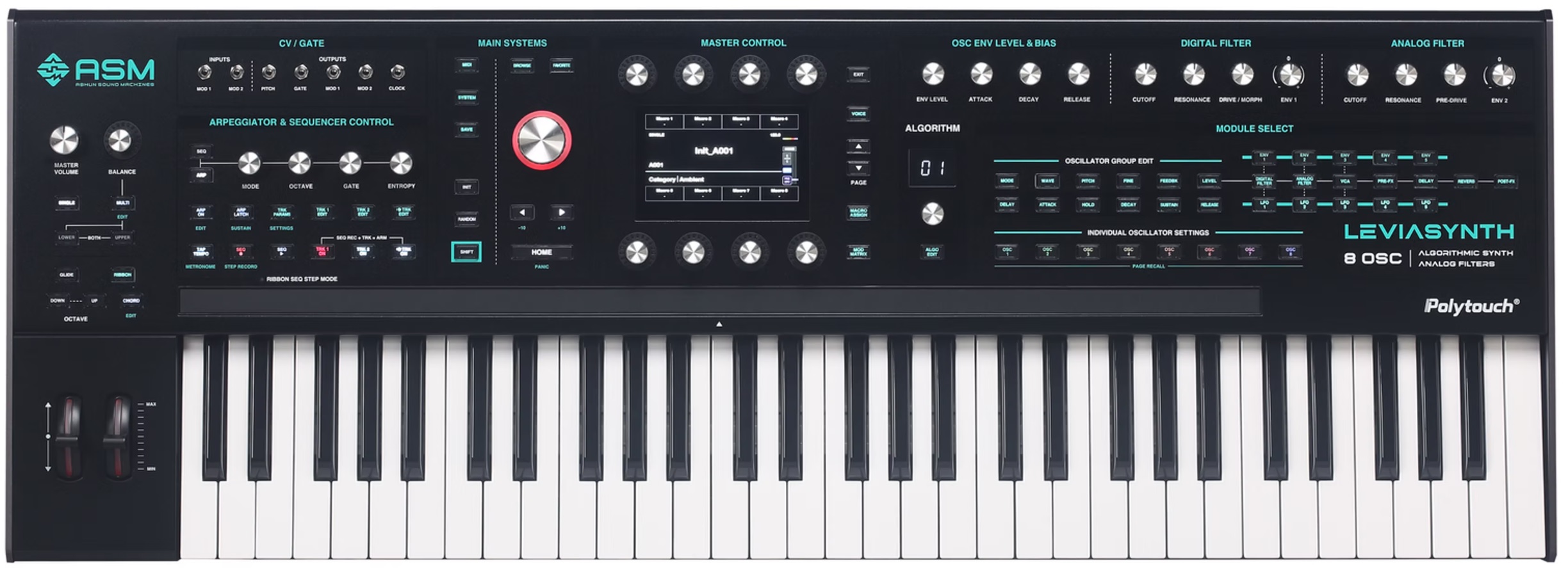
ASM Leviasynth announced

True to the rumors, Ashun Sound Machines (ASM) have announced the Leviasynth®.

ASM Leviasynth® is a 16-voice, 8 oscillator algorithmic synthesizer with analog filters.

  • Hybrid digital/analog synthesis engine
  • Eight oscillators per voice, 7 synthesis types, 140 algorithmic combinations
  • Over 300 waveforms
  • Vintage mode, Snap and analog feel
  • Morphing including ability to morph between algorithms
  • Polytouch® polyphonic aftertouch pads
  • Two sounds can be layered or split
  • Pair voices in binaural stereo mode
  • 13 envelopes, five LFOs, 18 digital filter modes, 4-pole analog LPF
  • 32 point modulation matrix; 290 destinations
  • 4 effect processors; 18 digital effect types
  • Solid steel chassis

Leviasynths algorithm routing allows flexible combination of the eight oscillators, including traditional frequency modulation.

Leviasynth has two forms: desktop module and 5-octave keyboard. Both are available for pre-order. The keyboard is $2,499 USD and the module is $1,799.

ASM Leviasynth® (NAMM 2026)

Ashun Sound Machines weren’t messing with us — Nessie is here!

Copyright © 2026 Paul J. Drongowski
NAMM 2026: More new products

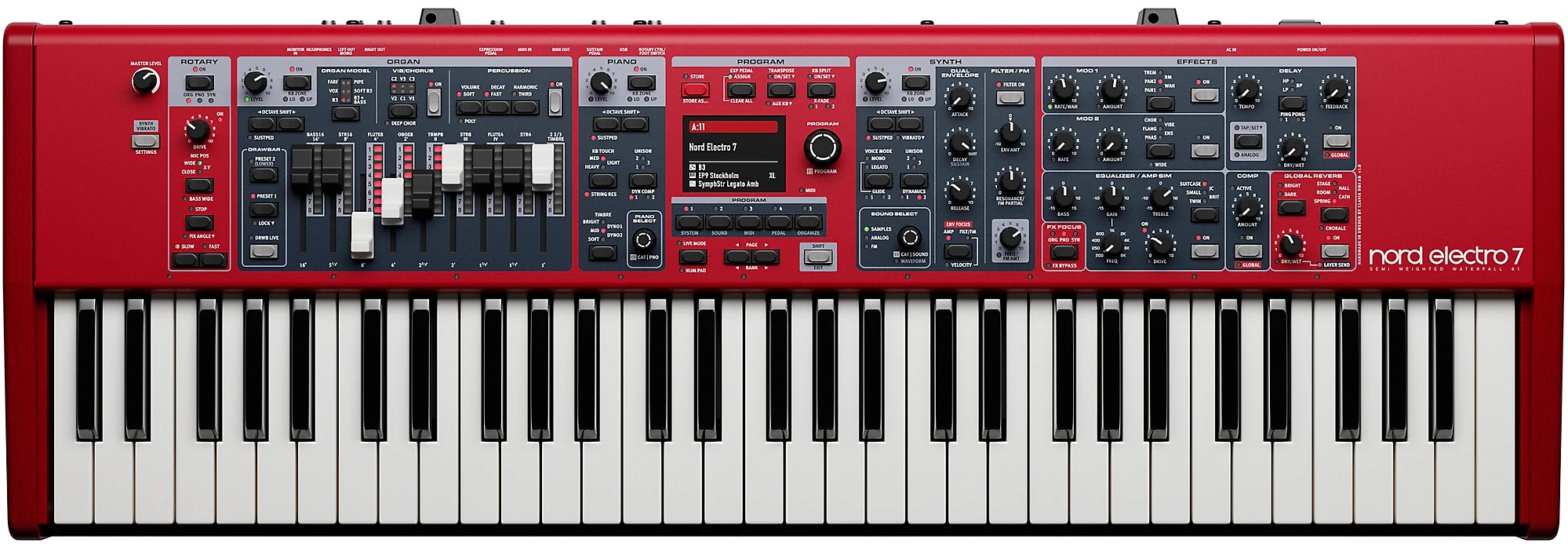
Nord Electro 7

Nord have spoken and they might get me back! I still have my Nord Electro 2 because of its superb playability. Electro’s synth section has always been “Meh” and acoustic instrument representations have not had as much life as Yamaha synths. The Nord Electro 7 takes care of business with a new synth section.

Some details:

  • Synth section: Samples, analog waveforms and FM synthesis; Low-pass filter with resonance control; Dual ADR envelopes
  • Organ section: Nord Organ 3 models including B3, B3 Bass, Vox, Farfisa, Soft B3 and Pipe organs
  • Physical drawbars with LEDs on all models
  • Rotary Speaker emulation from Nord Organ 3
  • Piano section: New dynamic compression, unison and timbre
  • Effects: Dedicated effects per section; New spring reverb, Brit and Suitcase amps

Nord Electro 7 (NAMM 2026)

The Nord Electro 7 has three models:

  • 61-key semi-weighted waterfall: $3,299 (pre-order)
  • 73-key semi-weighted waterfall: $3,599 (pre-order)
  • 73-key HP with triple sensor Kawai Hammer Action: $3,999 (pre-order)

Given the rather narrow range of pricing, it’s a question of picking the model that best fits your own home and gigging requirements.

I would lean toward the 61-key waterfall model on the basis of weight and size: 8.3kg (18.3 pounds). The 73 and 73 HP come in at 20.9 and 28.7 pounds. The HP should be a manageable schlep for players wanting hammer action.

I will definitely test drive one of these.

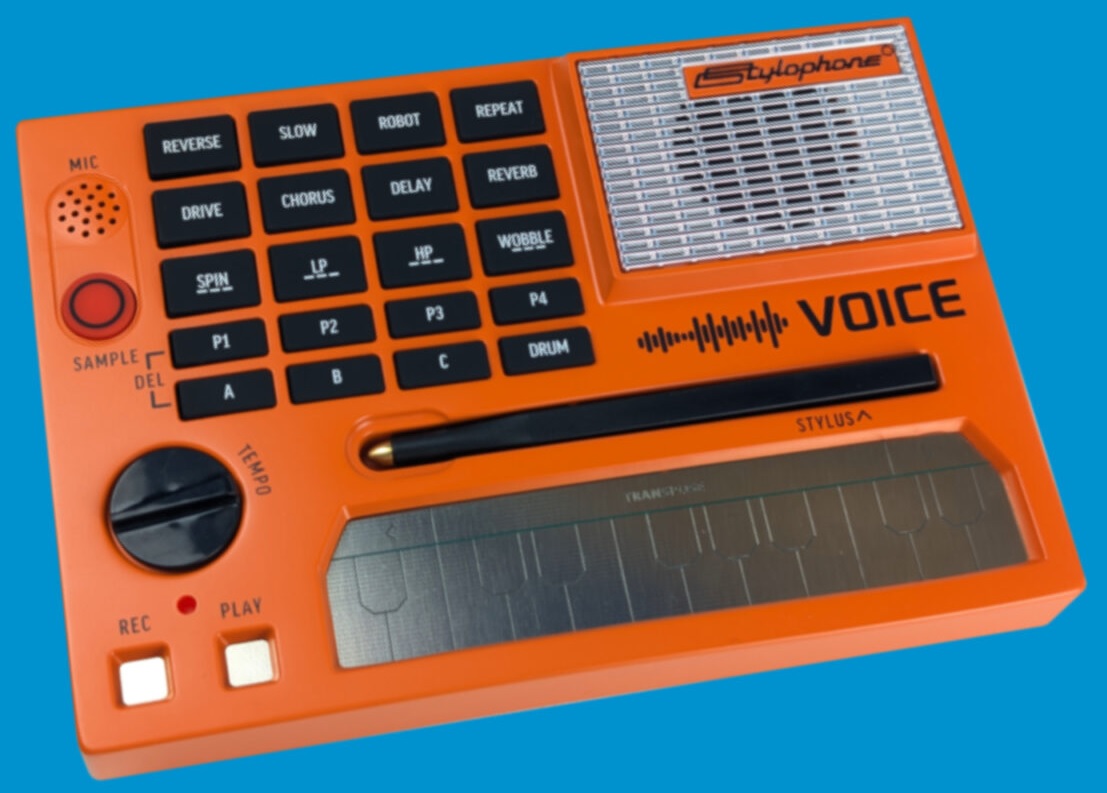
Stylophone VOICE portable sampler

Dubreq teased this little orange box last week — the Stylophone VOICE portable sampler. It’s the latest edition to the Stylophone Pocket Range. Check the video and the bullet points:

  • Capture samples via built-in mic or AUX input
  • Mangle them with 12 built-in effects
  • Built-in sequencer and 4 pattern memory slots
  • Add rhythm with integrated drum sounds
  • Run on 3 AA batteries
  • Play across a two-octave stylus keyboard with transpose
  • Built-in speaker and headphone output
  • Connect to other gear using SYNC IN/OUT

They’re going to sell thousands of these things and, well, that’s the idea. 🙂

Dubreq Stylophone VOICE portable sampler (NAMM 2026)

Anonymous sources say it will be available in July 2026 for $50. Given the current market situation (i.e., tariffs), take $50 with a grain of salt. Join the wait list if you want one.

Stylophone make and sell the GEN X-2 portable analog synth for $99 USD (available today). That’s the more likely price point in the USA.

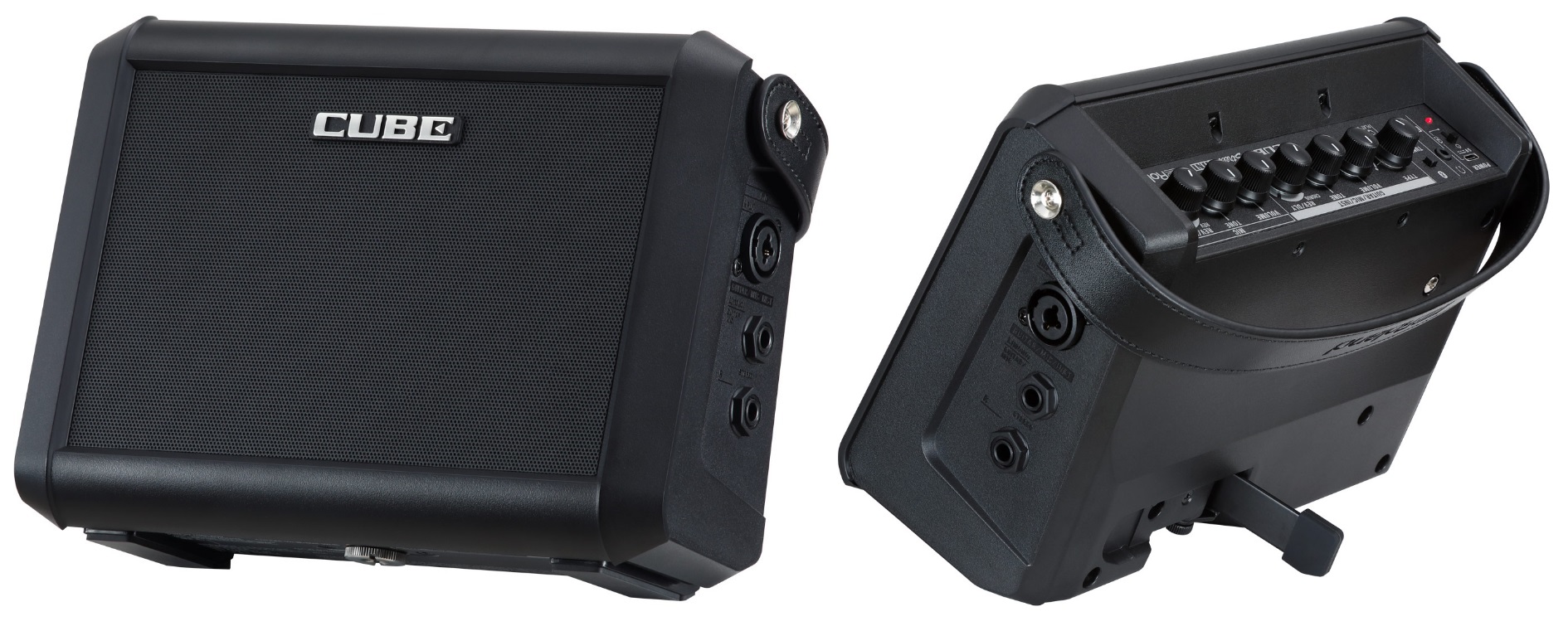
Roland CUBE Street MINI

Roland are announcing the CUBE Street MINI all-in-one PA with the following features/specs:

  • 2.1 speaker system: 10W (5W+5W), 12cm woofer + 2 x 1.2cm tweeters
  • Two simultaneous, independent channels of Bluetooth® audio
  • GUITAR/MIC/INST input channels
  • MIC channel supports dynamic microphones via XLR and TRS
  • Two channels each with built-in effects (GUITAR/MIC/INST channels: reverb/delay/chorus, MIC channel: reverb/echo)
  • Rechargeable battery lasts up to 7 hours (1,500mA current consumption)
  • 3 hour battery charge time
  • Built-in guitar tuner
  • Tilt stand and mic stand mount
  • Stereo mini jack for headphones and recording
  • USB Type-C® charging terminal (USB charging cable included)

Roland CUBE Street MINI (NAMM 2026)

Now, the important specs for streetcar buskers:

  • 274mm (10.8″) W x 110mm (4.4″) D x 192mm (7.6″) H
  • 2.2kg (4.9 pounds)

That ain’t bad. By way of comparison, the Headrush FRFR GO is slightly heavier and larger: 12.6″ W x 7.2″ H x 5.9″ D, 7.4 lbs. The Headrush has longer battery life. It does stereo, too, though it lacks the Cube Street MINI’s woofer and tweeter speaker configuration (dual 3″ full range speakers instead).

A lot comes down to the cabinet design. Try before buy to avoid annoying small-cabinet boxiness! If the CUBE Street MINI has a bass port, it’s hidden behind the grill cloth.

Copyright © 2026 Paul J. Drongowski
NAMM 2026: PSR-E483 and PSR-E583 announcement

Here are a few details about the upcoming Yamaha PSR-E483 and PSR-E583. Yamaha Global have released an overview video. Yamaha Global also have a longer walkthrough video.

  • 61-key velocity-sensitive keyboard
  • Over 860 voices including Super Articulation Lite voices
  • 345 accompaniment styles
  • Auto Chord Play plays pre-programmed chord progressions
  • 100 pre-programmed progressions or record your own
  • 41 DSP1 effetcs, 12 DSP2 effects, reverb, chorus, master EQ
  • Motion effects
  • Two assignable Live Control knobs
  • Pitch bend wheel
  • Looper to record and loop chord progressions, rhythmic parts, and melodic phrases
  • Quick Sampling to record short audio samples assigned to buttons
  • USB audio recorder (up to 80 minutes record time)
  • USB audio interface
  • E483: Two 6 Watt speaker (2 x 12cm) channels; E583: Two 12 Watt speaker (2 x 12cm) channels
  • Connections: Left and right line outputs, microphone input, AUX input, headphones, USB TO HOST (Type C) and USB TO DEVICE (Type A)
  • AC adapter power or AA batteries
  • MIDI Song To Style app

The PSR-E583 model as a modulation wheel and an expression pedal input. The PSR-E583 has more voices — 890 voices vs. 860 voices — including four more Super Articulation Lite voices (19 SArt vs. 15 SArt). PSR-E483 USA MSRP is $499 USD and MAP is $400. PSR-E583 MSRP is $599 and map is $490. Thus, the extra E583 goodies cost $90 more.

Yamaha PSR-E483 keyboard (NAMM 2026)

The PSR-E583 adds only 0.6 pound (0.3kg) of weight — 16.1 pounds (7.3kg) vs. 15.5 pounds (7.0kg). The E583 uses the larger PA300C 16V power supply while the E483 uses the PA-150 12V adapter. Whoa! Punters should take note of the different power requirements and should not interchange adapters!

Yamaha PSR-E483 keyboard (Rear)

The front panel and case have a clean, professional look in black. The redesigned LCD display has a “grid” format.

Yamaha PSR-E483 and PSR-E583 display (NAMM 2026)

If this sounds a lot like the older PSR-E473, well, you’re right. It is an incremental step, not a revolution. Still, Yamaha makes good quality instruments and the PSR-E483/E583 will make a good starting point for budget-conscious musicians. My own preference would be the PSR-E583 — I can’t live without an expression pedal!

Copyright © 2026 Paul J. Drongowski
NAMM 2026: Yamaha PSR-E483 and PSR-E583, updates

Yamaha promotions have mentioned PSR-E483 and PSR-E583 models before next week’s NAMM 2026 (January 20-24, 2026), so it’s a safe bet that they will appear from the fairy dust. Many budget-conscious punters have awaited new E-series models and will be happy to see them. No specs or details yet, but stay tuned.

Casper at Casper tutorSynth caught sight of a new Genos 2 Voice and Style Expansion Pack: “Back In Time”. Watch Casper’s video for more information. The pack looks like a “greatest hits” collection from early Yamaha arranger keyboards (e.g., PSR-2700, PSR-5700, PSR-6700, PSR-7000 and PSR-9000.

Genos and PSR users will be glad to get the updated MIDI Song to Style application (V1.2) — which will be announced, also. [Don’t look for it quite yet.] The update supports Windows 10/11, macOS 15 (Sequoia) and macOS 26 (Tahoe). Supported keyboard models are: Genos2, PSR-A5000, PSR-SX920, PSR-SX720, PSR-SX600, PSR-E583, PSR-E483, PSR-E383, PSR-EW320, PSR-EZ310 and PSR-I300.

Speaking of updates, the Yamaha CK61/CK88 have received update v1.10. The update adds the following new features:

  • Additional new MENU parameter: “Part SW Mode”.
  • Additional new SETTING parameter: “Pan”.
  • Additional new SETTING -> Rotary Speaker parameters: “Balance”, “Stereo/Mono”, “Speed”, “Acceleration” and “Transition”.
  • Additional new SETTING -> Audio Trigger -> Play Mode parameter: “Hold”.
  • Additional new shortcut operation to “Master Tune”.

And of course, “Fixed minor problems.” Download it today.

Yamaha SEQTRAK got a major update from v1.21 to v2.00. New features are:

  • Added “DrumKit” track type, allowing up to 7 drum sounds in a single track
  • Added “Synth” track type, enabling drum tracks to be used as synth tracks
  • Extended Bar Length button functionality to Drum tracks
  • Enabled value changes via ALL knob rotation while pressing the following buttons: VOL+/-, PAGE, SCALE, OCTAVE, KEY, BPM+/-, SWING

The SEQTRAK app is also bumped to v2.00. Check out the SEQTRAK update video.

MODX M OS v3.00 catches MODX M with Montage M (modulo reduced MODX M functionality). New features are:

  • Now supports Expanded Softsynth Plugin for MONTAGE M/MODX M.
  • New effect types (GS1 Ensemble & Tremolo, M/S EQ Compressor, CS Ring Modulator) have been added.
  • New waveforms (Clavi) and Performances have been added.
  • AN-X and FM-X parameters have been added to the Part LFO destination.
  • ESP Control has been added to DAW Remote.
  • Updated the initial control number settings for controllers used in DAW Remote.
  • Note Limit and Note Shift have been added to Scene, with support for External Part.

The MODX M update is available now. Here is Blake’s Take. Blake has been a busy lad writing Takes for the SEQTRAK and CK updates, too. All to be found on the YamahaSynth.com site. MODX M OS v3.0 demo by Masataka Kono (no talking, just playin’).

As Scott Hanson would say, “This is the witching hour.” Keep your eyes open as updates pop up like Spring flowers.

Copyright © 2026 Paul J. Drongowski
NAMM 2026: Tis the season

Time for a few NAMM 2026 musings. Tis the season.

Hammond-Suzuki are teasing a new model. If the video shows the new model, you had better save up your pennies. The new model does not look entry-level. Gotta wonder how import tariffs (tax) will affect USA pricing? [Free the markets!]

No new hardware (yet), but Clavia Nord have released new sounds:

  • Supreme Horns by e-instruments is an exclusive collection of premium horn samples featuring four different sections and a wide range of articulations.”
  • “The Astoria Grand is a mid-sized grand piano, crafted in New York in 1916 during the renowned “Golden Era” of American piano making.”

The Astoria Grand is compatible with Nord Stage 4/3/2 EX/2, Nord Electro 6/5, Nord Piano 6/5/4/3 and Nord Grand 2/1. Supreme Horns are compatible with those models plus Nord Wave 2/1.

Yamaha will be announcing two new keyboards at NAMM 2026. Of course, they will promote the new MODX M series keyboards. One — or maybe two — of the new keyboards will be the long-awaited PSR-E483. The PSR-E483 has a sibling — PSR-E583 — and both share the same digital logic board. The PSR-E583 is just a bit more expensive than the PSR-E483, so who knows? Given the naming, I don’t expect a major break from the current E-series models.

So far, Roland have announced the KIYOLA KF-25 and KF-20 Artisan digital pianos. They are intended to be art for your living space as much as they are musical instruments. The Artisan pianos are the result of a collaboration between Roland and the Japanese furniture manufacturer Karimoku. “The instrument’s carving takes cues from Hikimono, a technique in which wood is carefully prepared to achieve smooth, round shapes.” Aesthetically, the design is a cross between Scandinavian and Japanese influences.

Roland are taking a page from the Yamaha CSP playbook. The featured instruments are available through the minimalist front panel while other tones and features are accessed through Roland’s Piano app. You’ll find the KIYOLAs at the MoMA Design Store starting at $5,720 USD (non-member price).

Korg have not made any announcements at this point. The Korg USA and Japan sites mention the BM-1 Bluetooth MIDI interface, Nu:Tekt NUTUBE Overdrive BK, FISA SUPREMA C aero digital instrument (AKA digital accordion) and the usual gizmos. The BM-1 Bluetooth MIDI interface looks and behaves a lot like the CME Widi Master. I hope someone asks Korg about interoperability.

Speaking of CME, CME will be promoting the new H12MIDI Pro USB HOST MIDI interface. Quoting CME:

Presale starts March 2026 with shipping in April. Only 400 units available in the first run! Priced at US$199 (MAP/MSRP). US$139 during the presale period.

The H12MIDI Pro has six IN/OUT TRS MIDI ports (type A and B) plus USB Type-C. Like all upper-end CME MIDI boxes, it supports routing, filtering and mapping. CME seem to know their business and I recommend their gear over cheap knock-offs.

Ashun Sound Machines (ASM) will show its new ASM Diosynth wind synthesizer. The Diosynth has two Hydrasynth Wavescan Oscillators that allow you to choose 8 waves out of the 219 waveforms and morph between them. A new sample-based synth section adds multi-sampled instruments (separate attack, breath noise and key-off samples). The Diosynth manual mentions the much-rumored ASM Leviasynth (har-har). Given ASM’s recent denials, I wonder if the Leviasynth reference will be [redacted] from the manual?

Fender are pushing further into the studio market with a wide range of audio products. The Fender Studio AudioBox Go USB-C Audio Interface is a single audio channel interface at the low end of the range ($100 USD). The Fender Studio Quantum HD 8 USB-C Audio Interface is a 26-in/30-out rack box at $1,100 USD. Fender are also moving into the studio/MIDI controller market with the Fender Studio Motion 32 Production and Performance Controller at a very reasonable $330 USD. It does most everything one would expect from a modern groove box (Smart Scale, Smart Chords) and is tightly integrated with their Fender Studio Pro DAW software. Too expensive or want something APC-like? Try the smaller Motion 16 at $270 USD. Both Motion controllers are expected in “Spring 2026”.

Copyright © 2026 Paul J. Drongowski
Korg Volca Sample riddim?

Teenage Engineering wisely got out ahead of everyone and released the EP-40 Riddim and Ting combo just before the holidays (and January 2026 NAMM).

I went absolutely berzerk when I heard the EP-40 and quickly pulled out the Korg Volca Sample 2 to see what I could do. There’s a lot to love about the Sample 2. Its USB port and the Korg Volca Sample Librarian make sample management a snap. The step programmable sample parameters supply a lot of dynamic messin’ along with the tempo and swing knobs. The controls may be small, but I love their immediate accessibility.

The analogue isolator controls are a kick, too. You can dynamically kill or boost the low and high ends. Korg provide similar capabilities in their Volca Mix. That and the compression and stereo field effects are the reason why I keep the Volca Mix in the toolbox.

I wanted to create long-loop grooves as though I was working in Ableton Live. One of my favorite entertainments is to launch Live and drop in a few samples and hear what comes out. The Sample 2 workflow is not as smooth as Live since everything needs to go through the Volca Sample Librarian. Oh, well.

Other issues arise when using long samples (e.g., two or more bars). Lack of sample space is a major issue. The Sample 2 has only 8 megabytes — yes, 8 megabytes — of sample space. The Sample 2 operates at a 31.25kHz sampling rate and it’s not clear if down-sampling saves any space. (The Librarian does sample rate conversion.) An old trick to save space is to “pitch up” incoming samples and then slow them down during playback (returning the sound to its original pitch). This technique adds yet another prep step and buzzkill.

The Sample 2 comes with great factory samples. That’s both good and bad. The factory samples occupy roughly 80% of sample memory leaving you with 20% free. That’s roughly 26 seconds of available user sample time. Sure, you can wipe the factory samples, but really?

I smacked into limited memory capacity immediately. I trimmed several dub loops into 2 to 4 bar loops. None the less, drum, bass, skank and fill loops hit 100% right quick.

Loops longer than two bars trip another issue. Longer loops continue to play after hitting the stop button. This is known behavior and it is annoying. Next, if you want to play a two bar loop, you need to adjust the tempo down to half. That way, one can trick the Sample’s sequencer into thinking it’s a two-bar sequencer. Of course, this spreads the 16 sequencer steps across two bars thereby cutting your time resolution in half (eighth notes). Go for four bars and the resolution is cut to four quarter notes per bar.

Overall, I think Korg conceptualized the Sample 2 (and its predecessor) as a digital beat box to which a user can add short one-shots. In that regard, Volca Sample is quite successful, especially at its price point. It’s not designed for long samples.

I always like to give the gear I have (Sample 2) first shot and buy if necessary. As to EP-40 Riddim and Ting, I’ll have more to say after UPS gets here. 🙂

Teenage Engineering, by the way, are showing Field System Black in time for NAMM 2026. If you want to hear more about TE’s development process, I strongly recommend WVFRM’s interview with David Eriksson, co-founder and lead engineer of TE. If I were teaching today, it would be required for class.

Copyright © 2026 Paul J. Drongowski