Capturing Yamaha DJX styles

I’ve capture roughly 30 MIDI styles from a Yamaha DJX (PSR-D1). Contrary to popular claims on the Web, the DJX will send MIDI messages in its Style mode. You must send MIDI to an external sequencer (like a DAW) and switch patterns using DJX front panel buttons. The DJX wants to be the master clock in Style mode, so the receiving sequencer must be set for external clock.

I’m using the same basic set-up as my Yamaha AN200 adventure. The DJX sends 5-pin MIDI to an HP personal computer running good old (and I mean old!) Cakewalk Home Studio on Windows 11. Because the DJX is clock master, you need to prime Cakewalk to RECORD, turn to the DJX, and fast finger those front panel buttons.

I decided to lay down the Style parts in the following order:

    Lead In | Beat A | Break AA | 
            | Beat A | Break AB |
            | Beat B | Break BB | 
            | Beat B | Break BA | Lead Out

In normal arranger style lingo, the lay down order is:

    Intro A | Main A | Fill In AA | 
            | Main B | Fill In BB |
            | Main C | Fill In CC | 
            | Main D | Fill In DD | Ending A | Fill In BA

This lay down order makes it easier to find style sections and to drop in MIDI markers for the sections. I added an extra section above, Fill In BA, which usually appears at the end of a style file. I add Fill In BA manually when editing the PSR/Genos style file. Usually, Fill In DD makes a good BREAK section.

The DJX sends style data on eight MIDI channels (3 to 10):

    PSR/Genos       DJX          Mapping
    ------------    ----------   ----------
 3                  Hi-hat       -> PSR 15
 4                  Percussion   -> PSR 16
 5                  Bass         -> PSR 11
 6                  Phrase 1     -> PSR 12
 7                  Phrase 2     -> PSR 13
 8                  Phrase 3     -> PSR 14
 9  Rhythm Sub      Kick
10  Rhythm Main     Snare
11  Bass
12  Chord 1
13  Chord 2
14  Pad 
15  Phrase 1
16  Phrase 2

I created a template with eight tracks where each track receives a particular style part (MIDI channel). Thus, the MIDI data is broken out into separate tracks, ready for editing.

You’ll notice from the table that basic PSR/Genos styles operate on channels 9 to 16.

One can also use channels 1 to 8 in a PSR/Genos style by making the appropriate CASM settings. I’m going to keep things simple. My styles, my choice. 🙂

I created a separate Cakewalk template to start a PSR/Genos style. The template has the same track order, but different channel assignments along with initial voice and drum kit assignments. I simply copy and paste the captured MIDI to the style template. Track order is maintained and channels are auto-magically mapped.

The RAW style data from the DJX does not include voice, volume, effect, etc. settings. In a way, this is good because I will re-mix the style, anyway. The DJX has a FUNCTION (number 87) to send MIDI set-up data. I capture the set-up data to its own MIDI file then reverse engineer it. (Michael Bedesem’s Style Dump program is invaluable.) See the example set-up below.

The RAW style MIDI needs a little bit of time correction due to capture skew. The incoming timestamps are consistently 20 ticks too early. Cakewalk lets me nudge all of the messages 20 ticks later (i.e., to the right on the time-line). After nudging, the very first MIDI messages are 20 ticks too late. So, those timestamps need to be changed to 1 : 1 : 0 (measure : beat : tick). These simple steps properly align the RAW data to the timing grid. MIDI notes from the DJX are quantized to a grid, so you can tell if notes are aligned in Cakewalk by inspection.

As to scales and chords, the DJX programmers designed its styles for one-finger players. (Hate to say it.) If you strike a single key (C, for example), the DJX will use the preselected key scale, major or minor. Most of the DJX styles are in a minor key (e.g., Cm). The preselected scale may be based on a chord extension such as Cm7(9).

PSR/Genos styles are very flexible allowing major and minor scales taken from a wide range of chord types. I’m trying to keep things simple and target a single scale. A converted DJX style should always respond correctly when the played chord matches the original preselected chord (and scale). A converted DJX style might do the right thing (sound in-scale) or it might not.

Another complication is built-in chord progressions. Yes, some of the DJX styles have preselected chord progressions, e.g., |: Cm7(9) | Fm7(9) :|. Try as I might, I cannot shoehorn such chord progressions into a single chord type and scale. The DJX uses a lot of extensions (7th, 9th, 11th, 13th) and it isn’t always possible to find a single scale.

If a DJX style follows a progression, I take the simple approach and produce a one-finger style. If you’re familiar with arrangers, a one-finger converted style is similar to so-called “DJ Styles“, or INTROs and ENDINGs. Yamaha INTROs and ENDINGs are often complicated affairs which mimic popular songs and have non-trivial built-in chord progressions. It lets one-finger players sound like virtuosos. 🙂

Before ditching out, I’ll leave you with an example set-up. The only way I can keep my sanity is to make a table like this for each style to be converted.

********************************
098 On Hit   86 BPM
********************************

Minor key, chord progression, can override.  |: Cm7 | F7 :|

Ch Part       MSB/LSB/PC0 Level Pan Rev Cho Var
-- ---------- ----------- ----- --- --- --- ---
 3 Hi-Hat     126   0  22    92  C    0   0   0  B900 Kit
 4 Percussion 127   0  32    86  C   15   0   0  Jazz Kit
 5 Bass         0   0  35    90  C    0   0   0  Fretless Bass
 6 Phrase 1     0   0  73    86  C   50   0  52  Flute
 7 Phrase 2     0   0  90    60  C    0   0   0  Pad 3 (polysynth)
 8 Phrase 3     0   0  28    76 L63   0   0  26  Electric Guitar (muted)
 9 Kick       126   0  22    76  C    0   0   0  B900 Kit
10 Snare      126   0  22   100  C    0   0   5  B900 Kit

Reverb Type     Hall 1        F0 43 10 4C 02 01 00 01 00 F7
Chorus Type     Chorus 1      F0 43 10 4C 02 01 20 42 11 F7
Variation Type  Cross Delay   F0 43 10 4C 02 01 40 08 00 F7

Hi-Hat     B900 Kit   58  HH 2 Closed         --> Drum Machine OR HipHop Kit
                      59  HH 2 Open

Percussion Jazz Kit   49  Crash Cymbal 1      --> Jazz Kit
                      53  Ride Cymbal Cup
                      54  Tambourine
                      63  Conga H Open
                      64  Conga L

Kick       B900 Kit   37  BD T8 2     -> 44   --> T8 Kit  OR  Bass Drum Kit
                      38  BD Jungle 1 -> 55
                      39  BD Jungle 2 -> 54
                      40  BD T8 2Cont -> 45

Snare      B900 Kit   49  SD HipHop2          --> HipHop Kit

The channel table summarizes basic voice settings. These settings give me a starting point for new voicing and mixing decisions. The drum info at the bottom lists the specific kits and drum instruments in the rhythm tracks. The DJX uses non-standard drum kits (B900, DJX kit, etc.) and its drum notes (instruments) need to be mapped to standard PSR/Genos kits and drum notes. Mapping is a major pain, but somebody has got to do it. 🙂

Hope you found this post informative!

Copyright © 2026 Paul J. Drongowski
Yamaha DJX in the house

I mentioned the Yamaha DJX-II and its older brother, the PSR-D1 (DJX), in my article about vibe and why we need it. I converted a large number of DJX-II patterns to Genos/PSR styles and always wished to convert DJX styles, too.

Browsing around the Interwebs, one is led to believe that DJX patterns (“styles” in PSR-D1 lingo) were locked away in the DJX and couldn’t be tapped. Yes, the DJX does not send MIDI in SONG mode, but it does transmit MIDI style data in STYLE mode.

So, yeah, I’m crazy — I bought an old DJX (PSR-D1). Guitars 4 Vets was selling two DJXs on the Sweetwater Gear Exchange and I purchased one of them. Like most 25+ year old gear, it’s a bit scuffed up. It cleaned up nicely and is operational enough to yield its “secrets.” Here are a few observations.

Ancient weapons

Fortunately, the DJX Service Manual is available on Elektrotanya in case something goes wrong. The DJX dates back to June 1998 which were truly early days for Yamaha PSR, XG and AWM. Still, we see the beginnings of the classic Yamaha arranger architecture. The clock rates and capacities have changed drastically since 1998, but the general shape (structure) was there.

The key scanning board (MKS3) contains an HD63B05V0F07P CPU. The CPU is an Hitachi 8-bit CMOS microcomputer (8MHz clock) loaded with Yamaha’s custom firmware. The CPU communicates with the tone generator over a serial link. Shades of the E-Bus!

The tone generator is the first member of the Yamaha SWX processor family, the SWX00 (HG73C201FD). SWX processors integrate a host processor, AWM tone generator and effect units onto a single chip. The SWX minimize overall part count and are intended for low-cost keyboards. (The famous RM1x incorporates an SWX00, too.) The SWX00 is clocked by a blazing 8.4672MHz crystal oscillator, demonstrating that you don’t need gobs of gigahertz to perform basic sample-based synthesis.

The SWX00 isn’t going to knock anyone out with sound quality! Hey, it’s DJ-stuff, it’s naturally lo-fi! 22,050Hz evenly divides into 8.4672MHz; that’s 384 clocks per sample which is just about right for early AWM. 22,050 is consistent with sampling time: 6 seconds into 128KBytes of memory. Yes, “kilobytes.”

Caveat: The base sample rate could be as low as 11,025Hz. That divides evenly, too.

Polyphony is 32.

The SWX00 drives an NEC UPD6379AGR DAC. This is a 2-channel 16-bit audio DAC in an 8-pin plastic SOP. The post-DAC LPF is an UPC4570C-based -12dB/octave filter with a 27kHz corner frequency.

Speaking of sampling, the DJX does not have a discrete ADC. The incoming audio signal is routed to one of the SWX00’s analog inputs. The other analog inputs sense the front panel knobs. You ordered lo-fi, right? 🙂

The wave ROM — which contains the front panel voices, GM voices and drum kits — is an enormous 4MBytes. The program ROM is 2MBytes. Working memory consists of a 512KByte DRAM and two 128KByte SRAM devices. SRAM contents are kept alive by its own non-switched power bus. If you want to keep your memory contents alive, you’ll need six D-cell batteries or a reliable power adapter (12V center position 1.5A) — and don’t turn that adapter off! The batteries will slowly drain in the STANDBY power state.

Characteristics

Lo-fi aside, what you get isn’t bad:

  • Front panel voices and General MIDI (GM) sound set
  • GM drum kits plus several “DJ” kits
  • Basic effects: 8 reverb types, 4 chorus types, 33 DSP types
  • 100 styles
  • Two amplified speakers (2 x 6W, 2 x 12cm)
  • 5-pin MIDI IN and MIDI OUT
  • Sustain pedal input
  • PHONES output doubles as the AUX OUT
  • MIC/LINE In for sampling
  • Realtime knobs: cutoff, resonance, groove, assignable, bass boost
  • Ribbon controller and pitch bend wheel

The real-time knobs and master volume control are sturdy enough. The master volume control is a bit scratchy, but it’s set it and forget it. The pitch wheel has taken a real beating, unfortunately.

Arranger people will recognize a lot of basic Yamaha arranger features:

  • One INTRO (“LEAD IN”) and one ENDING (“LEAD OUT”) per style
  • One MAIN A (“BEAT A”) and one MAIN B (“BEAT B”) per style
  • AA, AB, BB and BA fill-ins (BREAK OUTs)
  • SYNC start
  • Chord recognition

That’s where the similarities end. Yamaha was quite creative in those days. There are different key zones and functionality beyond the usual arranger stuff, so be sure to read the manual if you get your own DJX.

Oddities

Here’s a few notable differences and quirks after working with the DJX and making first attempts at style conversion.

Like the DJX-II, the DJX has its own custom drum kits in addition to the GM drum kits (e.g., Standard kit, Jazz kit, etc.) The DJX “Special Kits” are:

  • Analog Kit 2 (T8)
  • Analog Kit 3 (T9)
  • Electronic Kit 2 (T8 + T9)
  • B900 Kit
  • DJX Kit

The Analog Kit 2 and Analog Kit 3 appear to be the predecessors of the well-known T8 Kit (808) and T9 Kit (909). Layout is somewhat different from the modern kits, but the content is similar. Electronic Kit 2 is a zany amalgam of 808 and 909 hits and noises. Maybe Electronic Kit 2 is analogous to the modern Drum Machine kit? Its instrument layout is totally non-standard.

The B900 kit was lifted from the B900 EOS workstation. One must assume that its inclusion was due to an affinity for sound designer Tetsuya Komuro and 1990’s J-Pop. “EOS” stands for “Entertainment Operating System” and is the bridge from QY- and QS-like products to the early Motif era.

The DJX kit was built purposely for the DJX. It includes vocalizations (“Yeah!”, “Go!”, etc.) and scratches. Neither the B900 kit or DJX kits have modern equivalents. The non-standard layouts of the “Special Kits” make style conversion a true PITA.

The DJX-II patterns have chord progressions cooked in. They are the ultimate for the one-finger player. The progressions are hip and are one of the reasons why I like the DJX-II.

The DJX hasn’t decided yet what it wants to be when it grows up. I hear simple progressions in some of the DJX styles. Other styles cater to a single type of extended chord like Cm7(9). Then there is the following description in the DJX manual:

When you play single notes, the DJX automatically produces chords that are based on the root note you play and are best suited to the selected style. For example, all single note chords in the Techno style (#001) are minor, all chords for Trip Hop (#002) are minor 7th 11th, etc. This lets you quickly and easily play the most musically useful and stylistically appropriate chord changes — just by pressing a single key!

Playing full chords may not change the pattern chord as intended. For example, playing major seventh chords will not change the chords of a pattern that has minor and dominant seventh phrases and lines.

There are definitely DJX styles like that. Yikes! It’s going to be difficult to find a consistent transformation from DJX chord behavior to modern arranger fingering behavior. I might need to freeze the chord progressions and make everything one-finger.

Please don’t get me wrong. These differences in behavior might seem like oddities and quirks after using Yamaha gear for so many years. I kinda wish Yamaha would get the old creative mojo again. Both the DJX and DJX-II were nifty inventions.

Copyright © 2026 Paul J. Drongowski

In praise of vibe

Just to show I’m alive!

One of my favorite projects is mining and reclaiming “lost” content from vintage beat boxes and such. I’ve shared results here — free downloads:

I spent some time messin’ with Yamaha Mobile Music Sequencer (MMS), searching for pleasant chord progressions. [Yamaha have discontinued the MMS app — bummer.] The MMS patterns are based on the Yamaha MM6/MM8 quasi-synths, quasi-arrangers. I reclaimed a bunch of MMS patterns and converted them to Genos/PSR styles.

As much as I like MMS, the patterns are missing that je ne sais pas. Some might say they are missing verve; let’s say they are missing vibe.

Vibe is the feeling of excitement when we hear music that moves us emotionally. The opposite of vibe, I guess, is “flat”, like beer, champagne or sode which has lost its fizz. The stuff may taste OK, but it’s missing the bubbles that tickle our tongue and nose.

Thus, I haven’t been motivated to polish and release the MMS-based styles. It takes energy to convert and create content — energy to get through the slog of production. Sad to say, the factory styles in my beloved QY70 are kinda flat, too.

Extrapolating a bit, lack of vibe may affect the way people feel about arranger workstations. Yeah, early arrangers had a certain cheese factor. However, today’s tone generators and effects are fully professional and contemporary mid- to high-end arranger keyboards are capable of polished results.

A lot of arranger folks prefer Korg arrangers over Yamaha saying “Korg has a live sound.” Part of that liveness is vibe. Yamaha are trying to move the needle with their newer styles. The new Genos2 R&B styles, for example, have a lot more vibe. They are well-played and Yamaha need to hire those style developers again!

The DJX-II has some of the best vibe-y patterns produced by Yamaha. That’s why I had fun converting DJX-II patterns to SEQTRAK. These patterns groove. As of this writing, the original DJX (PDR-D1) remains untapped. The DJX patterns (styles) are shorter than DJX-II with fewer variations and no cooked-in chord progressions. Still, the DJX (1998!) has more vibe than a typical arranger.

If you would like to learn more about contemporary music, I recommend the book “Switched on Pop” by Nate Sloan and Charlie Harding. The book is based on their podcast of the same name. It’s a popular musicology book that should appeal to musicians, songwriters and listeners alike. If you want to know where popular songs get their vibe and mojo, it’s a good read.

Copyright © 2026 Paul J. Drongowski

Pop demo styles for Yamaha

The new Yamaha PSR-E483 and PSR-E583 have new styles which have not yet been released for Genos and the SX series.

Since folks might be interested in hearing the new styles, Mark Wilburn and I teamed up to create a few quick and dirty Yamaha arranger styles based on the new E-series styles.

Please think of these styles as “demos“. They are far from perfect:

  • Two MAIN variations just like the E-series
  • One INTRO and one ENDING just like the E-series
  • E-series voices not the stellar Genos/SX voices
  • No effects beyond the basic E-series chorus and reverb
  • No chordal variations for INTRO/ENDING

If you have ever attempted style creation, you know how much work it is to add these features. That’s not an excuse — just admiration for Yamaha’s style developers! We expect Yamaha to bring these styles up to Genos/SX quality in the future. Thus, these styles today are “demos”.

If you would like to try the demo styles, here is the ZIP file (E-pop-v1.zip).

The ZIP extracts into a directory named “E-Pop”. E-Pop has three subdirectories:

  • Styles: What you have been waiting for (.STY files)
  • Source: Raw MIDI files and Cakewalk projects
  • MIDI: More raw MIDI song files (SMF Type 0)

If you want to try the styles, copy the .STY files to your arranger, load them up and play. The README.TXT file has some suggested chord progressions.

People who want to try their own hand at style creation will be interested in the Source and MIDI subdirectories. These subdirectories contain the raw MIDI files which we used to create the demos. Be sure to read the README text files for additional tips and information.

As to suggested song names, we drove ourselves crazy trying to match songs with the demo styles. Sometimes everything matched up, sometimes not. Please post your guesses on the Yamaha Musicians Forum where we lurk. 🙂

Have fun!

Copyright © 2026 Paul J. Drongowski
Yamaha PSR-I510 and PSR-I610 keyboards

Yamaha sent the PSR-E583 and PSR-E583 to India to find themselves. Like the Beatles, they came back changed.

You must check the PSR-I510 and PSR-I610 introductory video. Holy mother of funk! 🙂 Damn, I want more of that. More Indian demo tones.

The overview video with Karthick Devaraj has some sweet moments, too. [Dude can play.] Could you imagine if we had this ting during the 60s? Let me hear your sitars ringing out!

Yeah, yeah, I know. This is cultural appropriation on my part. 🙂

Now the PSR-I510 and PSR-I610 plug:

  • 887+ Voices, including 40+ Indian Voices
  • 382+ types of auto accompaniment Styles, including 60+ Indian Styles
  • 40+ Riyaz (Tabla/Mridangam & Tanpura) patterns
  • 65+ Songs, including 25+ Indian Songs
  • PSR-I510: 2×6 Watts; PSR-I610 2×12 Watts
  • Pitch bend wheel
  • Modulation wheel (PSR-I610 only)
  • Looper recording
  • Auto Chord Play
  • USB to Host (Type C), LINE OUT, MIC IN

Some of the Indian voices are Super Articulation Lite, e.g., S.Art Lite Santoor, Swarmandal. My friend Bharadwaj will be happy to see the Riyaz patterns.

This is the first time I had fun listening to demos all week.

Yamaha Global have posted a new MIDI Song to Style introduction video.

Copyright © 2026 Paul J. Drongowski
Adafruit Feather: Megavoice key switching

More experiments and I have the initial cut of a simple key switching program for Yamaha MODX and Genos/PSR guitar Megavoices. The program is written in CircuitPython and runs on an AdaFruit Feather M4 Express. Here is a link to the ZIP file with the code.

Megavoice: Background information

MODX, Genos and mid-range PSR keyboards have Yamaha Megavoices. Megavoices combine several waveforms into a single voice (assigned to a single MIDI channel). They are intended mainly for arpeggios (Montage/MODX) and styles (Genos and PSR).

Generally, a Megavoice uses velocity switching to trigger waveforms. Some of the waveforms play ordinary notes, some play articulation notes, and others plays special instrument effects. Let’s take a look at the Nylon Guitar voice, which is implemented on both MODX and Genos. [Megavoice technology dates back to the early Motif and Tyros era, so I won’t be listing all of the models with Megavoice!] Many other guitar Megavoices (e.g., Concert Guitar, Clean Guitar) have the same velocity layout. Megavoice Nylon Guitar has the following velocity layers:

    Vel Lo  Vel Hi  Waveform      Key range
    ------  ------  ------------  -------------
       1      20    Open soft     C6 and below
      21      40    Open medium   C6 and below
      41      60    Open hard     C6 and below
      61      75    Dead          C6 and below
      76      90    Mute          C6 and below
      91     105    Hammer        C6 and below
     106     120    Slide         C6 and below
     121     127    Harmonics     C6 and below
       1     127    Strum noise   Above C6
       1     127    Fret noise    Above C8

MIDI note numbers 0 (C-2) to 96 (C6) comprise “playable” notes. Note numbers above 96 are instrumental effects: strum and fret noise. The strum and fret noises include the sound of a pick crossing the strings, body knocks, and sleeve noise (fingers sliding on strings).

As you can tell from the layout, if you try to play a Megavoice from the keyboard, you’ll have an interesting and maybe frustrating experience. No one really has the skill to control their key touch to reliably play an open hard note versus a dead note, etc. However, a sound designer can program different sounds into a MIDI track with precision, thereby making an expressive, realistic guitar part in a style or arpeggio. [Historical note: Many of the Motif ES/XS arpeggios were taken from PSR Megavoice styles!]

Genos, Tyros and PSR have a way of making the base waveforms playable: Super Articulation (SArt). The SArt engine monitors the incoming key strikes and, in real-time, chooses a destination waveform for each note. If you play in a detached manner, SArt triggers one of the open string waveforms (depending upon your strike velocity). If a second note occurs within a fourth with a slightly higher velocity, SArt plays a slide (up). SArt plays a body knock in response to the ART.1 and ART.2 buttons.

Clavinova CSP and CVP do not have articulation buttons. However, you can still join the fun. Select an S.Art guitar voice and tromp on the foot pedals!

Montage and MODX have Expanded Articulation (XA). It plays open notes as expected and relies on the ASSIGN 1 and ASSIGN 2 buttons to bring in an articulation like Slide or Harmonics. (Element programming allows more flexibility than this simple example, BTW.)

Feather MIDI event processor

In order to implement key switching, we need to break into the path from keyboard to tone generator. We want a chance to respond to incoming notes (key strokes) before the notes go to the tone generator (TG).

We can’t hack the hardware in MODX or Genos, but we can send MIDI messages from the keyboard (e.g., MODX MIDI OUT) to an external MIDI event processor which sends a modified MIDI message stream back to the instrument (e.g., MODX MIDI IN).

I described the hardware for an AdaFruit Feather-based MIDI event processor in an earlier post. The event processor consists of an AdaFruit M4 Express processor, MIDI I/O FeatherWing, OLED FeatherWing and Joystick FeatherWing. Up to this point, I haven’t exploited the OLED or joystick, so you could get away with a very tiny Processor plus MIDI I/O combination. It’s small and efficient enough to be powered by a LiPo battery!

The hook-up looks like this:

    ----------------         --------------       --------------
   |                |       |              |     |              |
   |         MIDI OUT ----> MIDI IN        ----> RX             |
   | MODX6          |       |  FeatherWing |     |  Feather M4  |
   |          MIDI IN ----> MIDI OUT       ----> TX             |
   |                |       |              |     |              |
    ----------------         --------------       --------------

The MIDI FeatherWing communicates with the Feather M4 Express over the serial I/O RX and TX ports. The Feather M4 Express communicates with the Mu editor and development environment on a Windows PC (not shown). Code is written in CircuitPython which is loaded into the Feather M4 from the PC over a USB communication link. The code can print status information via USB to the Mu environment — very handy when debugging.

Since this is a prototype, I’m trying to keep things simple. The MODX6 requires a little bit of manual configuration:

  • MIDI I/O directed to/from the 5-pin DIN connectors
  • MIDI LOCAL OFF (i.e., key events are not sent directly to the TG)
  • Nylon Guitar or other compatible guitar Megavoice selected on Part 1

That’s not too much to ask.

Key switching

It may be said that neither SArt or XA bring together all of the available articulation waveforms in a factory preset single voice (part). That’s where key switching can play a role.

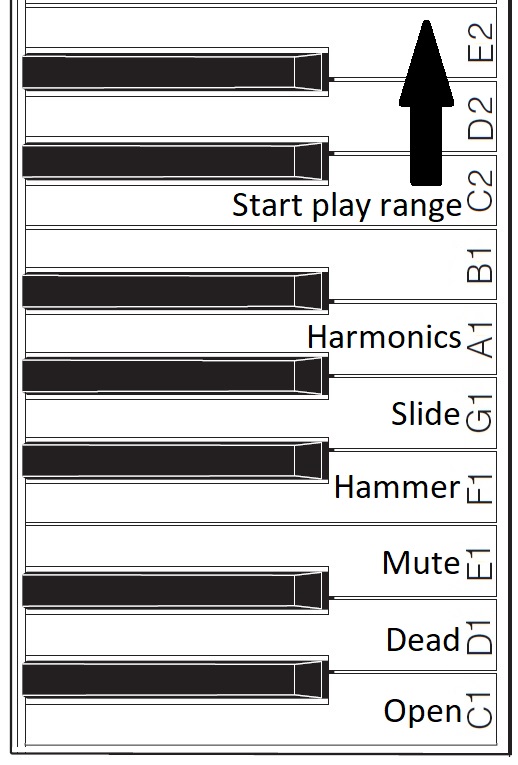
Basically, I want to assign a range of keys to switch between articulations and sounds. For my initial experiments, I assigned MIDI notes 36 to 47 to key switching duties. On MODX6 (61 keys), this key range covers the lowest octave of physical keys (the power-up default, without internal octave switching enabled). Articulations are assigned to keys as shown below.

Assigned key switch articulations

For now, I’m holding the black keys and B1 in reserve. One possibility, for example, is to assign body knocks to F#1, G#1 and A#1. We’ll see!

The articulation keys enable the assigned articulation. All keys from C2 and above play notes using the selected articulation. The articulation keys latch. So, if I strike E1 (Mute) and then strike a key in the play range, a muted guitar note will sound. All subsequent notes will be mute notes until I strike C1 (Open) and return to playing open strings.

I spent some time experimenting with Genos SArt voices in order to get ideas for enhancements. I will summarize my notes in a future post. Suffice it to say, Yamaha have some good ideas! It’s all a matter of code. 🙂

Copyright © 2025 Paul J. Drongowski

Smart Pianist, CSP and ChordPro

Yamaha repurposes hardware and software technology all the time. The Yamaha CSP series digital pianos (CSP-100 series and CSP-200 series) and Smart Pianist borrow a lot of technology from the Yamaha Genos and PSR arrangers. Yamaha Chord Tracker users know that Smart Pianist also has Chord Tracker technology inside.

Chord Tracker provides a number of Smart Pianist-like features. Chord Tracker analyzes an audio song, extracts its chords, and displays the chords in a chart. Like Smart Pianist, Chord Tracker follows the chord chart while playing back the original audio file. Pretty much anyone can use Chord Tracker in this way to figure out the chords to a song and play along.

Genos and PSR arranger people, however, get extra goodies. Chord Tracker can send the chords to the arranger for playback. Even better, you get to choose the accompaniment style. Want to re-imagine a song as a country tune? You can do it.

Extended ChordPro

Chord Tracker sends the chords to an arranger in a Standard MIDI File (SMF). Instead of notes, the chords are represented in Yamaha System Exclusive MIDI messages.

When I analyzed the file format and chord messages, my first thought was “ChordPro”!

You’ve probably seen ChordPro on the Interwebs. It’s that simple text format for song lyrics and chords. I extended ChordPro adding a few new features to make musical time explicit and precise. (Original ChordPro relies on the musician for time.) Then I wrote a Java program to translate an Extended ChordPro song to an SMF suitable for playback on a Yamaha arranger. Check out an Extended ChordPro demo.

Playback ChordPro Example

Well, guess what? Smart Pianist and CSP-170 can play back SMFs generated from Extended ChordPro songs.

Here is a short ChordPro snippet for Steve Winwood’s “Can’t Find My Way Home”.

{t: Can't Find My Way Home}
{key: D}
{artist:Blind Faith}
{time: 4/4}
# Style: SongwriterBallad (stylecode: 5980)
{stylecode: 5980}
{tempo: 96}

{start_accomp}

# Introduction
[C][*IA]
{c: Introduction}
[Csus2:2][*MB] ---- [G/B:2] ---- [Gm/Bb:2] ---- [D/A:2] ---- 
[F:2] ---- [G:2] ---- [D] --------
[Csus2:2] ---- [G/B:2] ---- [Gm/Bb:2] ---- [D/A:2] ---- 
[F:2] ---- [G:2] ---- [D][*FB] --------

{c: Verse 1}
Come [Csus2:2][*MB] down off your [G/B:2] throne, and 
[Gm/Bb:2] leave your body a- [D/A:2] -lone.
[F:2] Some- [G:2] -body must [D] change.
[Csus2:2] You are the rea- [G/B:2] -son, I've been
[Gm/Bb:2] waiting so [D/A:2] long.
[F:2] Some- [G:2] -body holds the [D][*FC] key.

An Extended ChordPro song begins with a header containing the title, artist, key, tempo, time signature and auto-accompaniment style. After the header, you hit the {start_accomp} directive which tells the arranger (Genos, PSR or CSP) to start playing.

The rest of the Extended ChordPro file consists of chords, e.g.,

    [C]   [Csus2:2]   [G/B:2]   [Gm/Bb:2] ...

section control directives, e.g.,

    [*IA]  [*MB]   [*FC] ...

and lyrics (plain text). Oh, yeah, you can throw in comments, too, e.g.,

    {c: Introduction}
    {c: Verse 1}

The Java program (cp2mid) translates the chords, directives and lyrics into an arranger-ready Standard MIDI File.

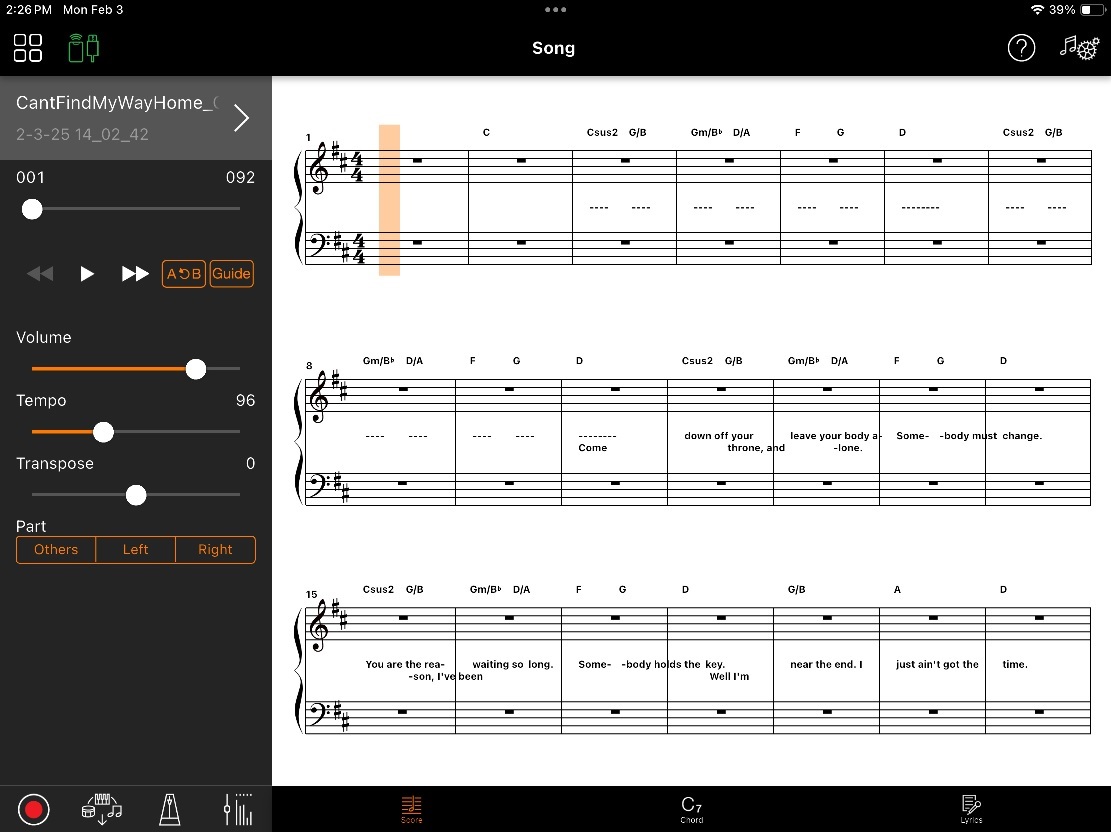
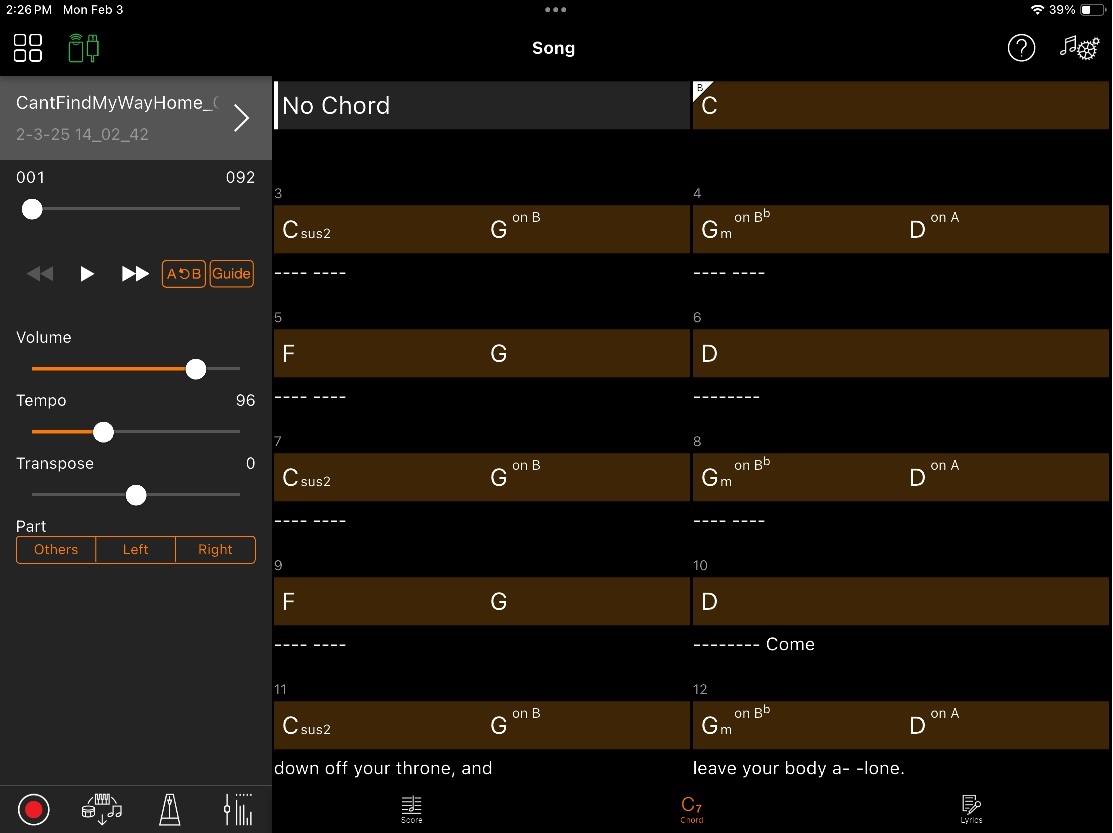
So, what do we get after we import the SMF into Smart Pianist? The screenshot above [click to enlarge] is the score. The chord symbols and lyrics appear with the staves. There aren’t any notes because the SMF doesn’t have any notes; it’s contains only chords and lyrics.

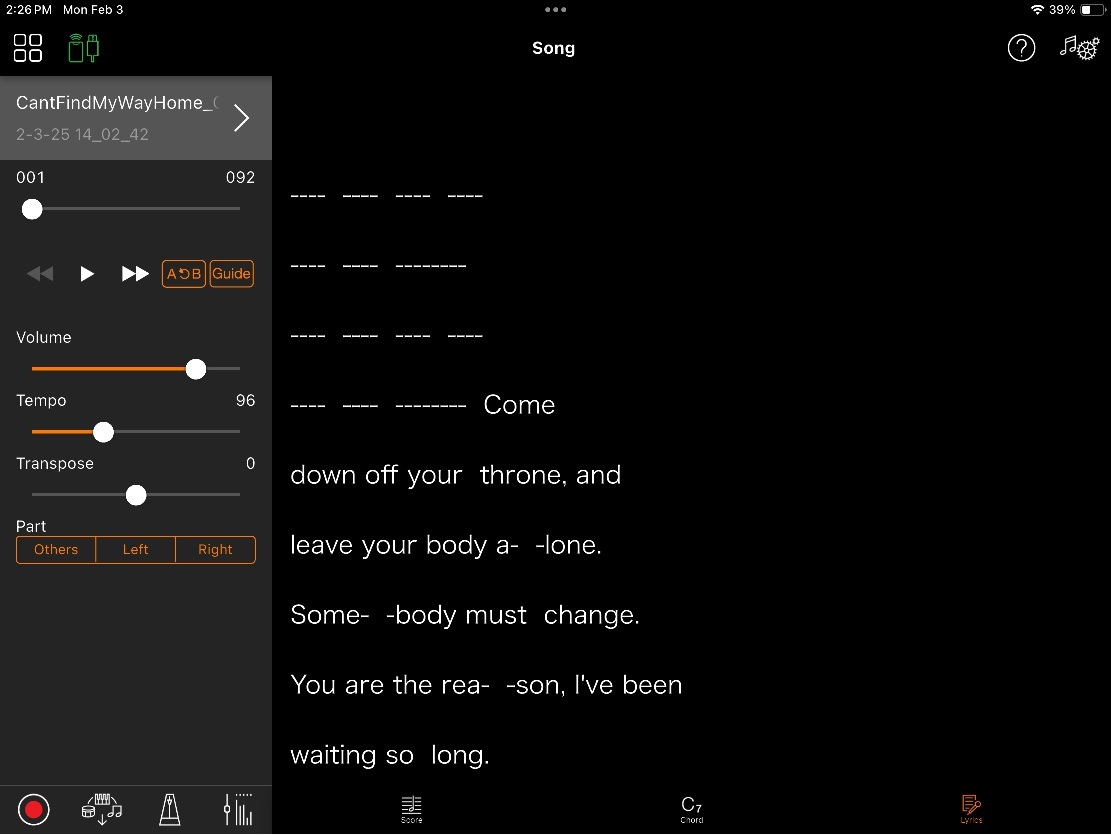
The chord chart looks familiar. But, hey! Smart Pianist display lyrics interspersed with chords. I never saw Chord Tracker do that.

The final screenshot shows the lyrics alone. All of those dashes (“—-“) come from the Extended ChordPro song. They are placeholders during instrumental interludes.

Summary

Today’s example demonstrates a different way to use Smart Pianist and CSP digital pianos. If you own both a Yamaha arranger workstation and a CSP, you should be able to transfer Chord Tracker SMFs to Smart Pianist and the CSP.

If you want to know more about Extended ChordPro and its implementation, please see:

Copyright © 2025 Paul J. Drongowski

The quest for Backing Conductor

Yamaha released a new version of the Smart Pianist app. The release notes list three new features:

  • Backing Conductor (CSP Series, CVP Series and P-S500 only)
  • A-B Repeat for PDF scores
  • Scores for the 50 Classics are distributed and displayed via PDF

The Backing Conductor sounded intriguing and I was anxious to jump on it right away.

I noticed that the CSP Series 200 models require a Firmware Update for Backing Conductor. Be sure to check the downloads page for your CSP.

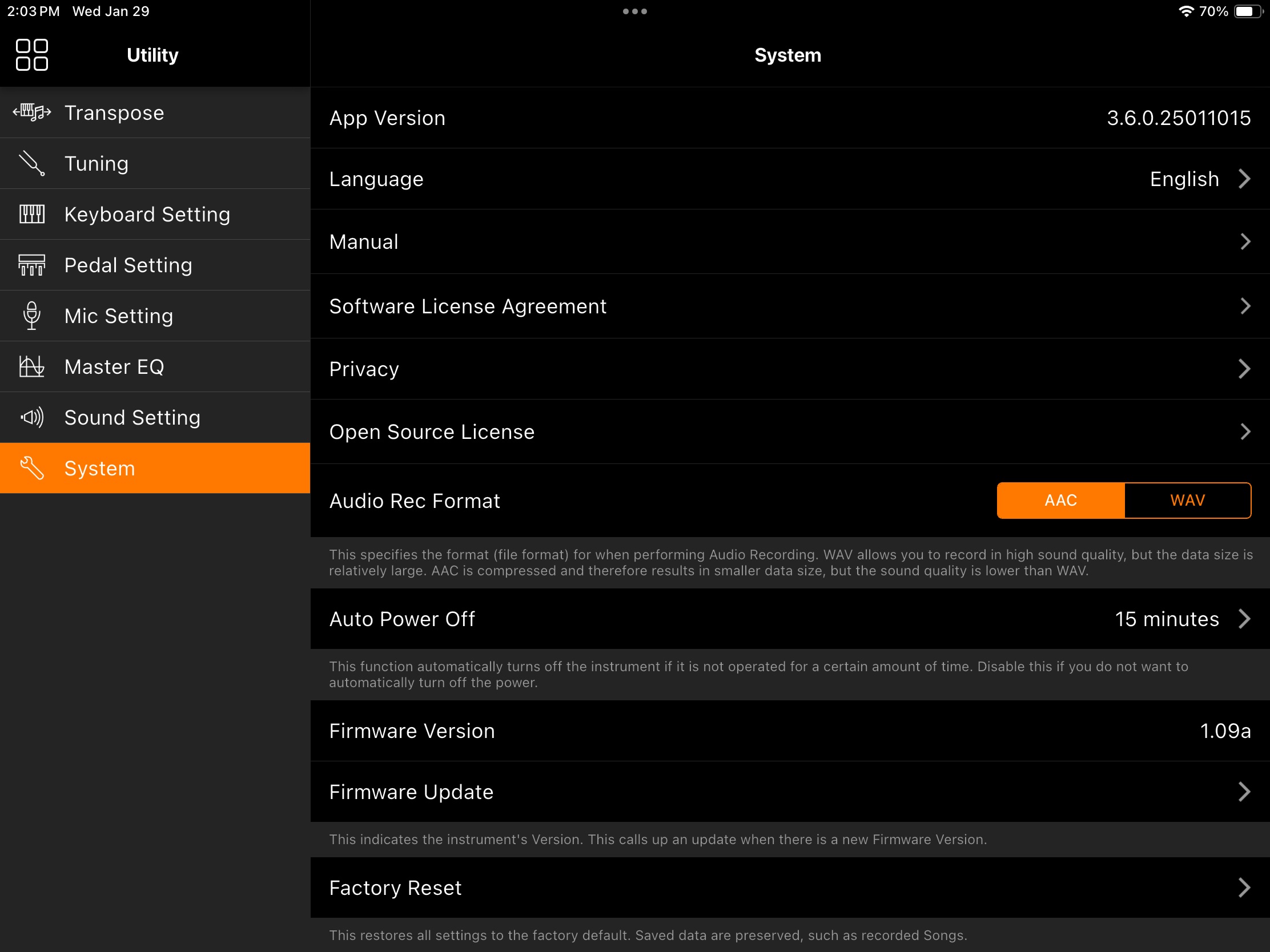
The Apple App store pushed version 3.6.0 to my iPad. No problem there. The screen shot (above) shows Smart Pianist 3.6.0 (January 15, 2025) running and firmware 1.09a installed on the CSP-170. Hopefully, firmware version 1.09a is good because Yamaha never stated if an update is required for the CSP 100 series.

What is Backing Conductor?

The big question: “What is Smart Pianist Backing Conductor?” At this point in time, Yamaha have not publicized any additional information. The Smart Pianist guide, such as it is, has not been updated.

Yamaha software engineering believes that they design intuitive user interfaces (apparently). No documentation required! Quite frankly, if one of my CS students made such a statement, they would have been corrected and marked down. Seriously. 🙁

And so began my quest for “Backing Conductor.”

Post-install splash screens

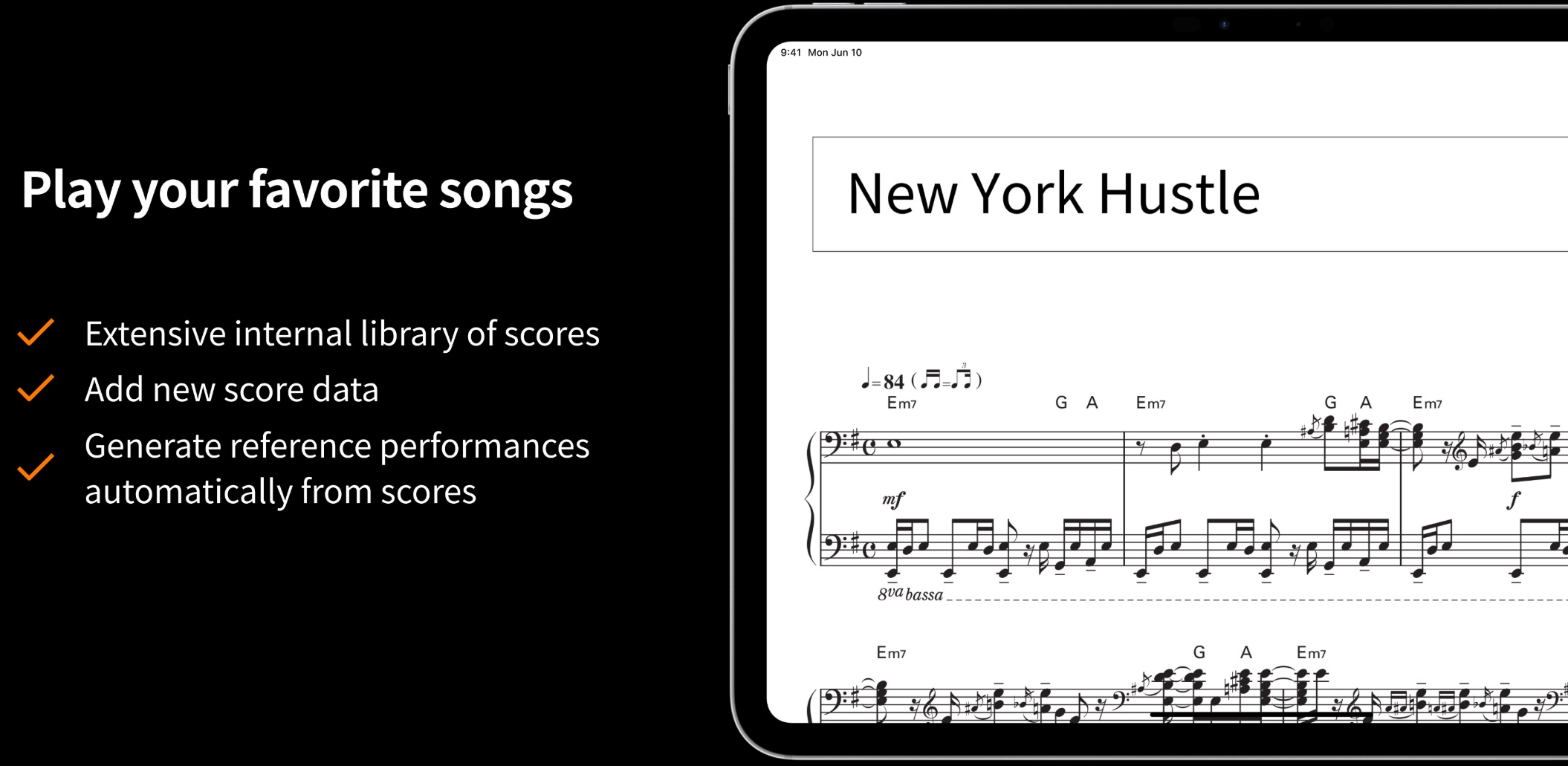
At one point in my quest, I deleted the Smart Pianist app and re-installed it. Below are two rather informative post-install screens which highlight Smart Pianist’s capabilities.

Blink or idly flip by and you will miss these highlights. Forever — they won’t be repeated.

Yamaha should distribute the example score “New York Hustle”. It appears in other examples. By the way, “Hustle” is misspelled as “Hastle” in the second splash screen. Sorry, I live with a professional editor…

Start-up splash screens

Every time you start up Smart Pianist and connect to your instrument, you will be treated to a different splash screen. Again, don’t blink because you will miss something.

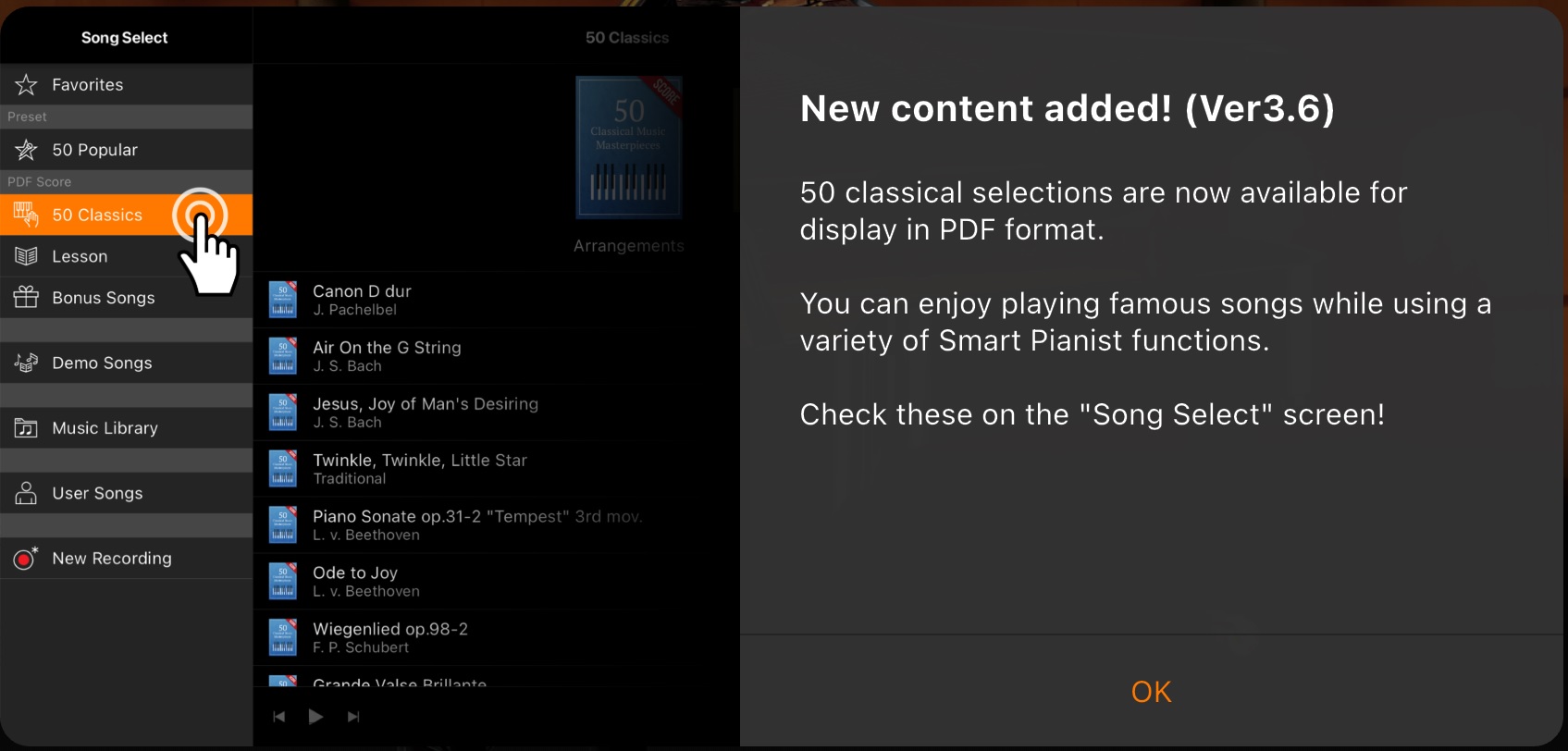
Here are three of the screens which highlight new features in version 3.6.0. Yeah, I know. What are they and how do I use them?

“Backing Conductor” gets mentioned again without details.

Backing Conductor, finally

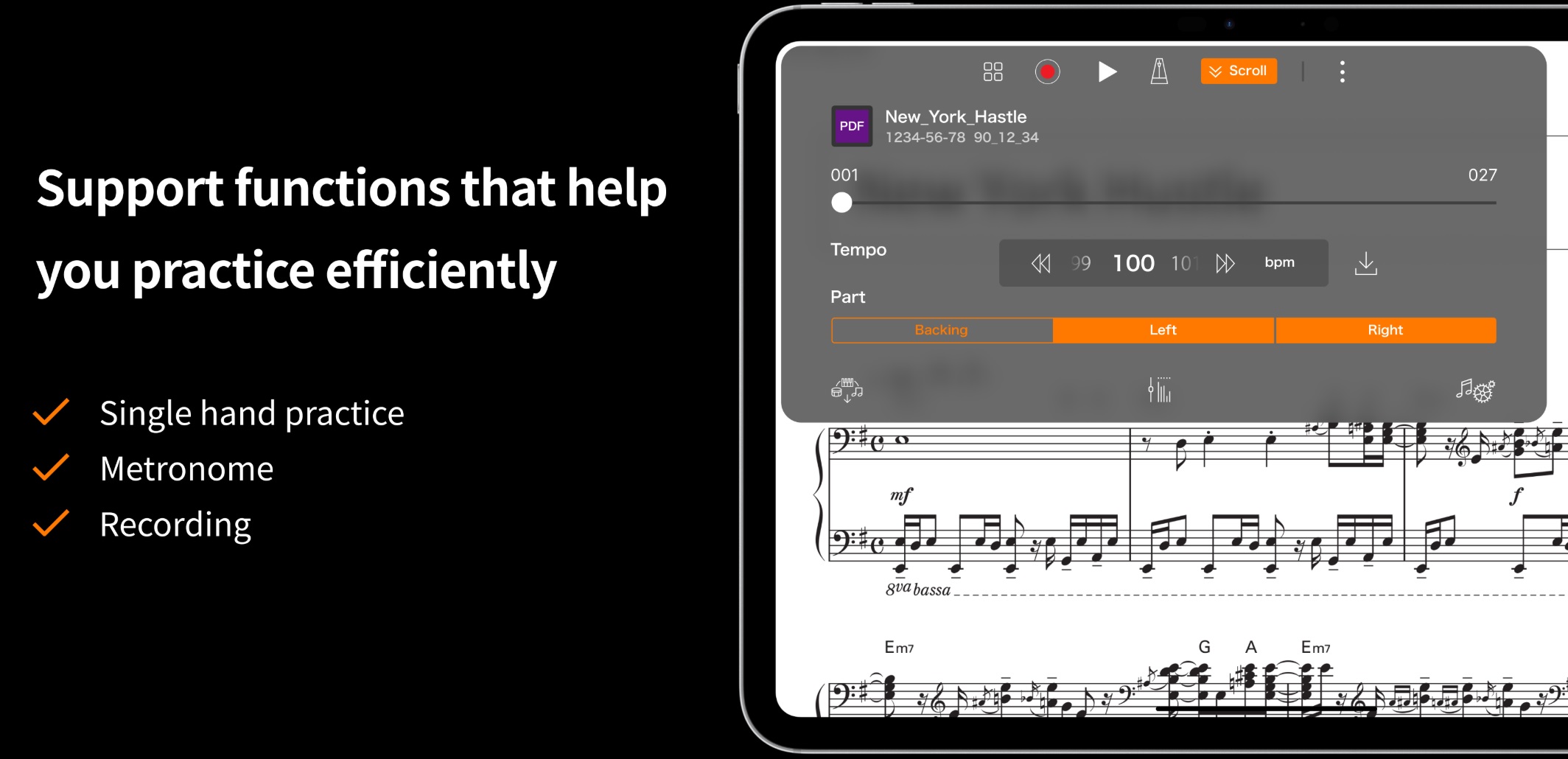
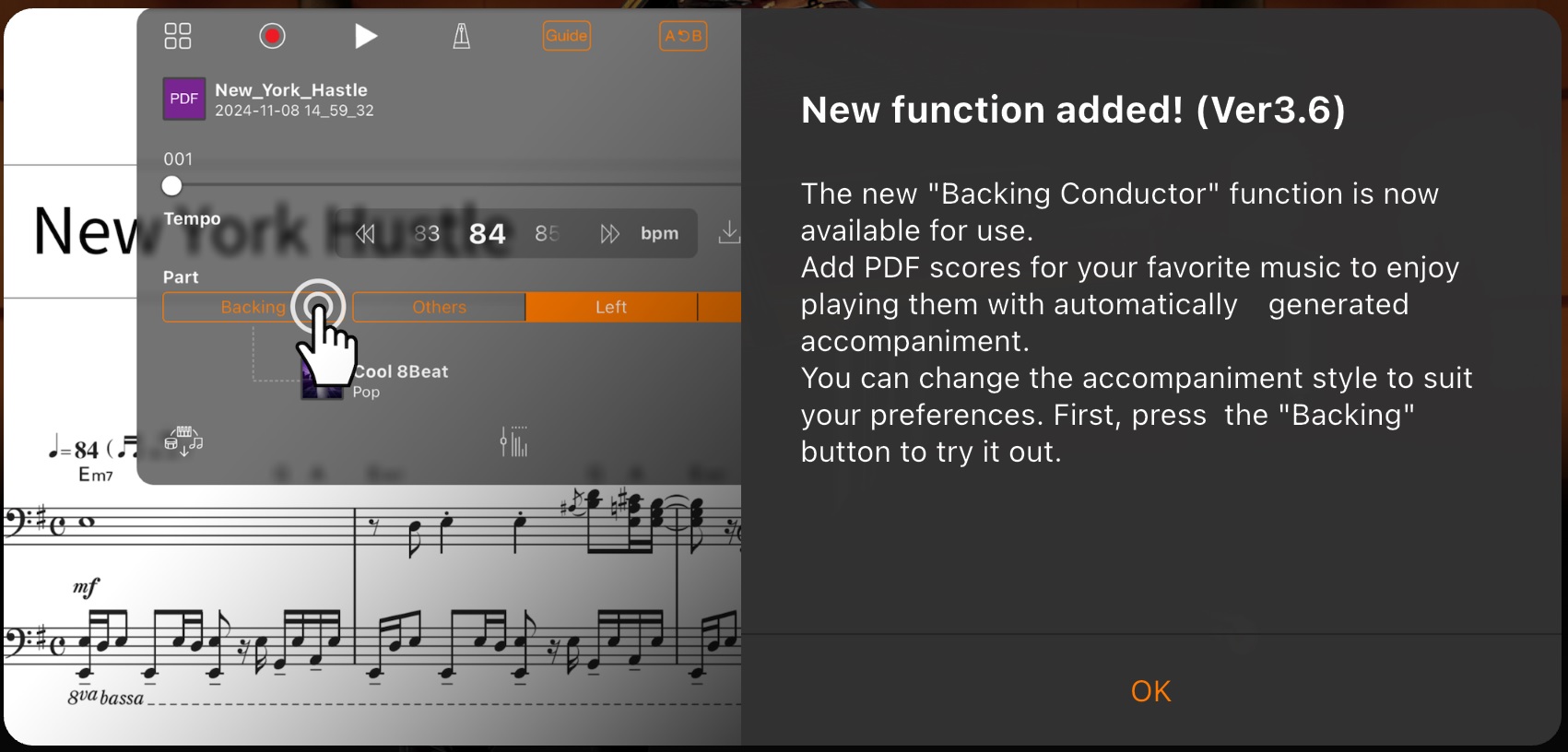
Finally, I hit on the fourth of these elusive splash screens (below).

Oh, now I see what I should look for!

When a PDF is displayed, Smart Pianist displays this playback control box at the top. Folks who have used earlier versions of Smart Pianist recognize the three part buttons: Others, Left and Right. Backing Conductor adds a new part button: Backing. I guess when Backing is turned ON, you can change the auto-accompaniment style, in this case, Cool 8Beat.

There’s “New York Hustle” and “Hastle”, again.

Taco Bell’s Cannon

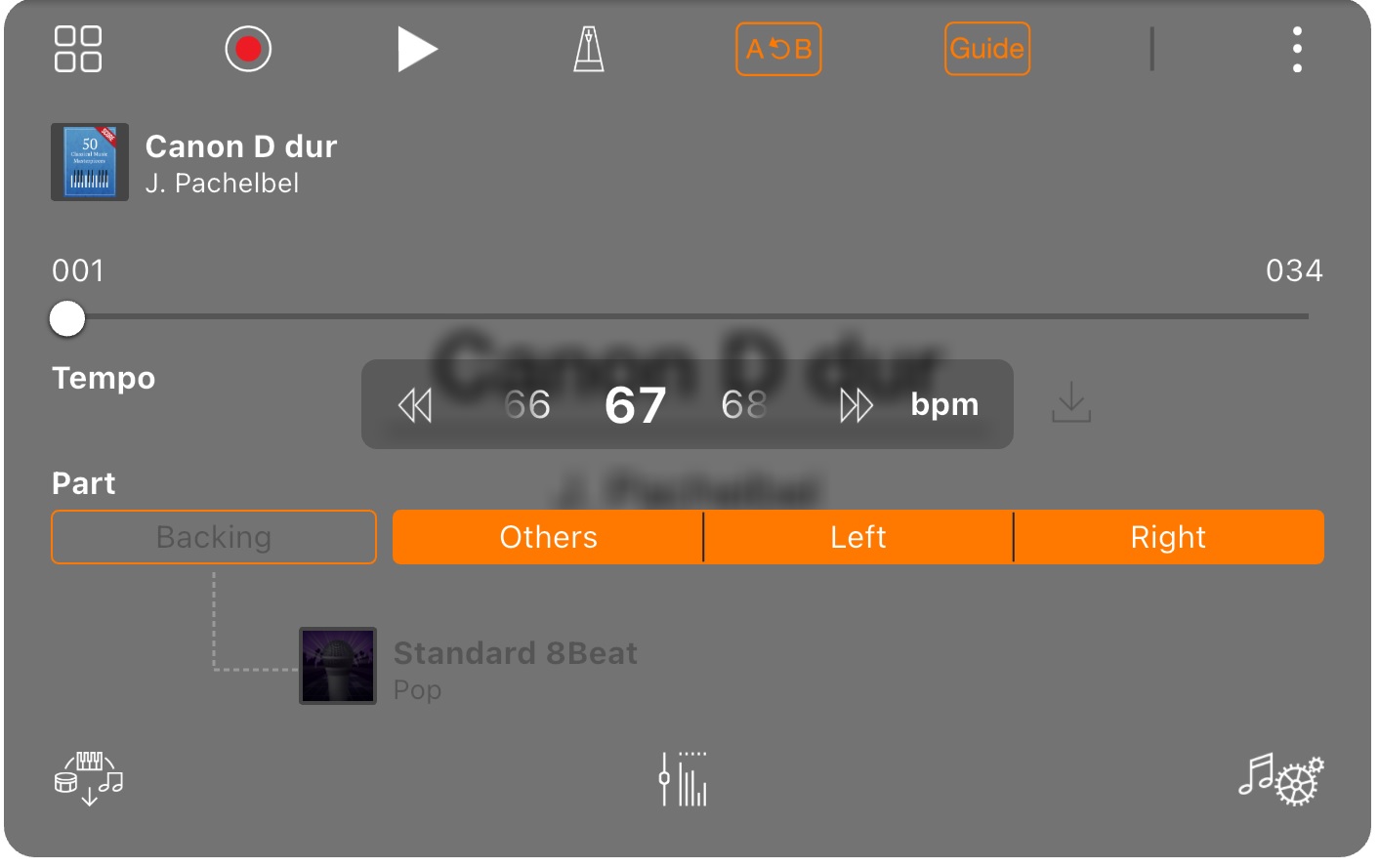
Now that I have a clue, let’s try a PDF score: Canon D dur by Pachelbel.

Uh, oh. The Backing button and accompaniment style are greyed out. What gives? In this case, Smart Pianist plays back the PDF score without backing.

One of my big frustration using Smart Pianist is what appears to be inconsistent behavior and options. There must be rules governing behavior and user operations. The rules probably differ by the content/media type:

  • PDF score (PDF file)
  • MIDI song (Standard MIDI File)
  • Audio song (MP3, AAC, etc.)
  • Chords extracted from an audio song

I wish Yamaha would explicitly write down the dos and don’ts for each data type. Explicit rules would set expectations straight and reduce frustration.

Bonus screen

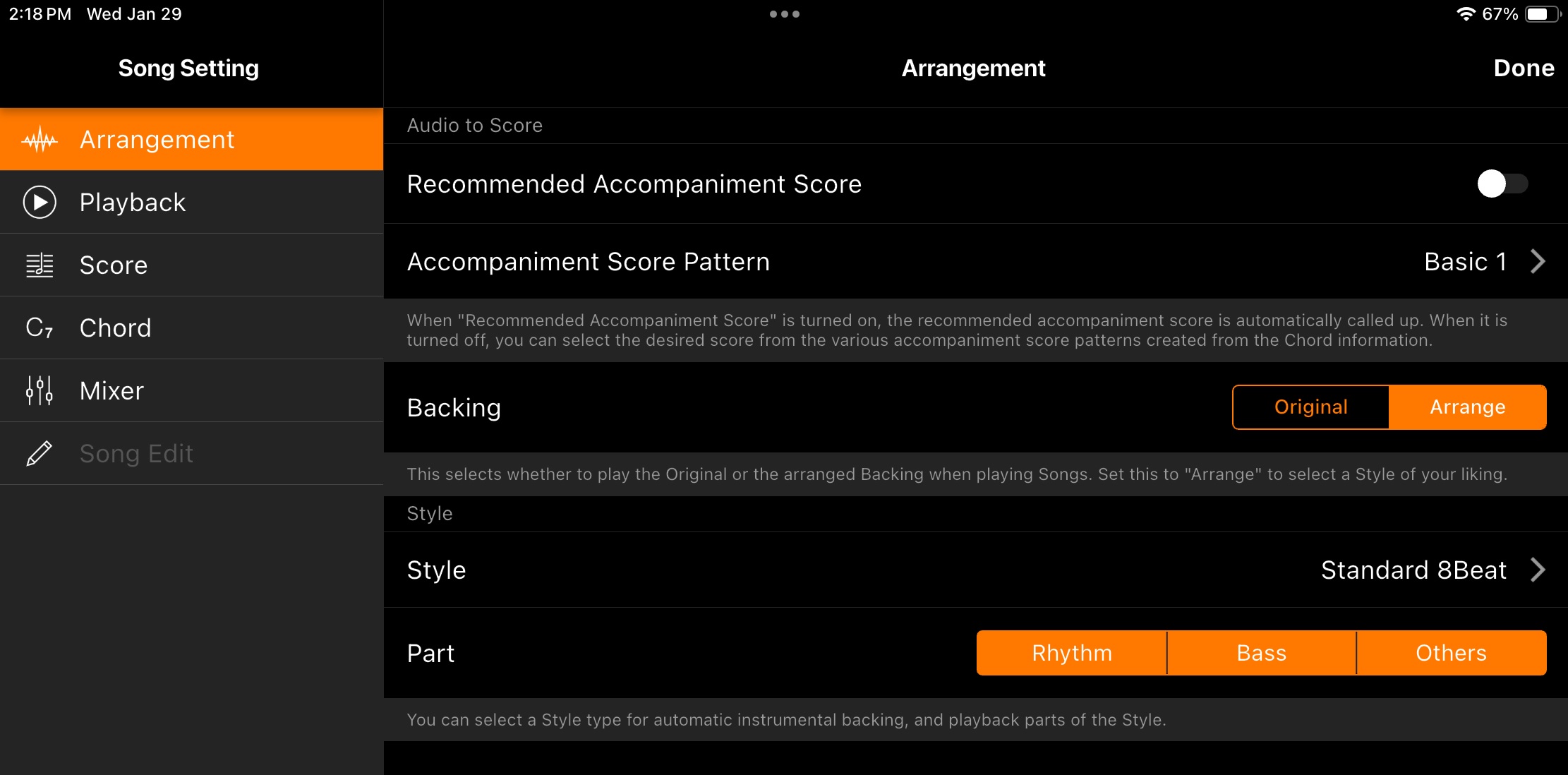
To round things out, here is the Song Settings Arrangement screen for Audio to Score playback.

In this screen, you can choose the accompaniment score pattern to be used when displaying the extracted score and you can choose the backing style. I like the ability to turn different backing parts off (on) individually. Sometimes ya just want a beat, sometimes a beat plus bass, and sometimes a full backing.

Summary

I hope my difficulties have not discouraged you. Maybe you’ll be a little bit smarter then I when you sit down with Smart Pianist.

Before ending, I want to mention my top Smart Pianist want: the ability to add new styles to Smart Pianist. I’m not asking for Style Creator as one finds in the arranger workstations — simply the ability to load new styles and play new backing styles. There are so many user-contributed styles (including my own!), the ability to load and play with new styles would give CSP a huge boost.

Copyright © 2025 Paul J. Drongowski

Yamaha PSR-SX920 new voices

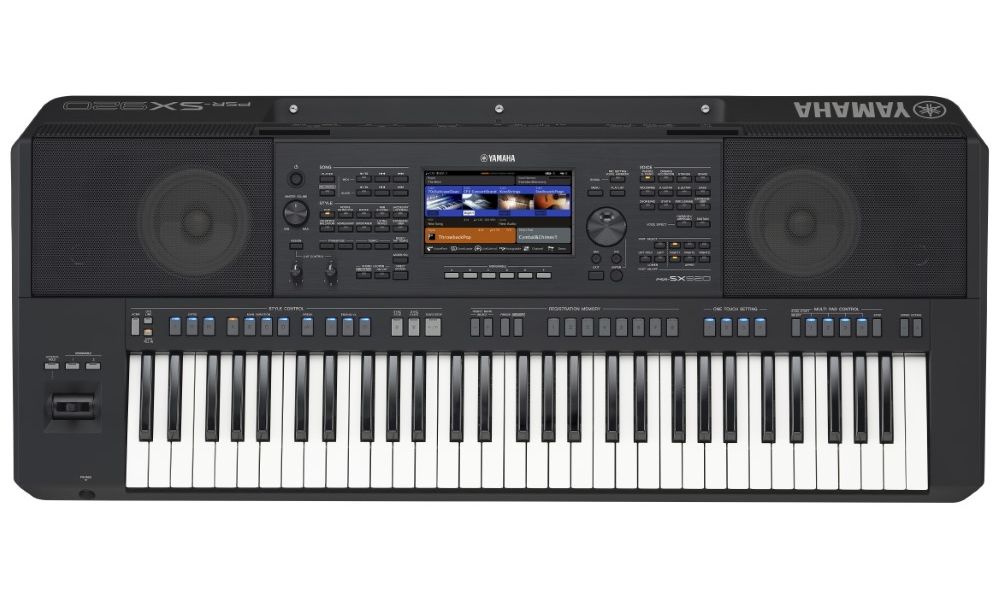
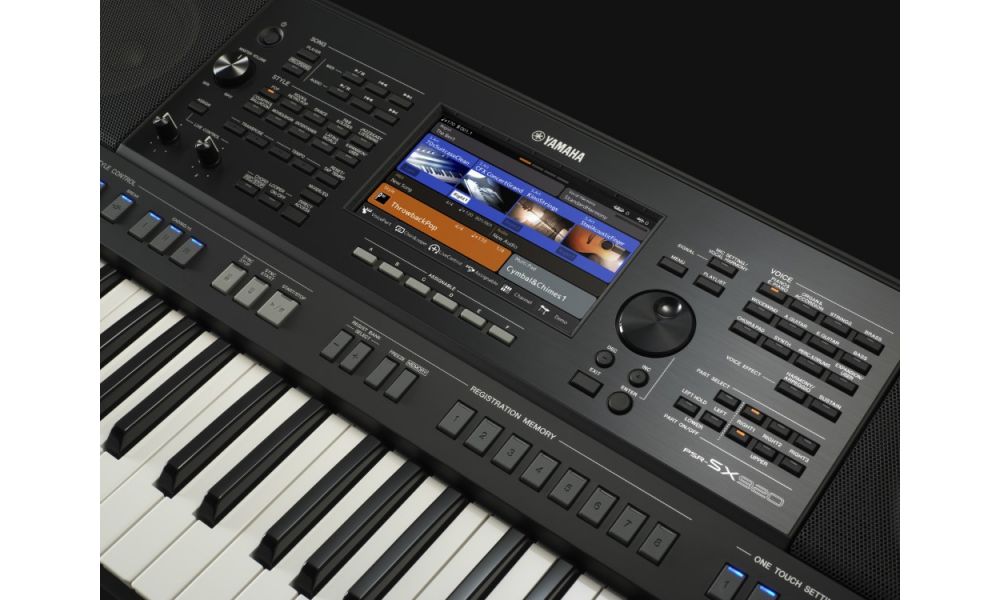
Yamaha arranger folks would like to know about the new(er) voices added to the PSR-SX920. Unfortunately, at the time of this writing, the PSR-SX920 Data List is not yet available.

However! Yamaha did make available a new version of its MIDI Song to Style application, including voice list files for the SX920 and SX720. Here are some of the additions which I spotted.

  • CFX piano and its many variations
  • C7 studio grand and its variations
  • Suitcase EP is upgraded to S.Art, now called “70sSuitcase”
  • 70sVintage (Wurli) EP now S.Art
  • Kino Strings
  • New brass including 80s synth brass and bass trombone
  • New sax sections
  • D-model folk guitar
  • Mandolin and uklele
  • Active bass (finger, pick, etc.)
  • Mini Moog lead
  • Drum kits: Vintage Muted Kit, Vintage Open Kit, Jazz Stick Kit, Jazz Brush Expanded, Brazilian Kit, Pop Latin Kit 2 Comp

And, of course, everyone wants to know about the new S.Art2 voices added to the SX920. This is the first time a mid-range PSR has gotten S.Art2.

  • S.Art2 JazzViolin
  • S.Art2 CelticViolin
  • S.Art2 SoftTrumpet
  • S.Art2 ClassicTrumpt
  • S.Art2 BalladSopranoSax
  • S.Art2 PopSopranoSax
  • S.Art2 TenorSax
  • S.Art2 FunkTenorSax
  • S.Art2 PopTenorSax
  • S.Art2 Clarinet
  • S.Art2 BalladClarinet
  • S.Art2 RomanceClarinet

MegaVoices got a big boost. Here are the new-to-SX920 MegaVoices:

  • Kino strings (4 small ensembles, 5 large ensembles)
  • Martin D folk guitar (5 variations)
  • Steel acoustic finger and thumb picking variations
  • Uklele
  • Mandolin
  • 60s vintage guitar (regular Strat and slap)
  • Active bass (Stingray)

Don’t forget, the MegaVoices are the sonic base for S.Art instrument voices. Look for a bunch of new electric guitar voices based on the 60s Strat, for exaample.

I can’t and won’t guarantee that these lists are complete. They will have to do until the Data List PDFs roll out and we can pore over them in detail.

Copyright © 2024 Paul J. Drongowski

New PSR-SX720 and PSR-SX920 models

I just found this information about the new Yamaha PSR-SX720 and PSR-SX920. It is now appearing on multiple on-line retailer sites. 🙂 I will have further in-depth comments after I get my hands on the manuals.

Yamaha PSR-SX720 Arranger Workstation

  • FSB keyboard, with 61 touch-sensitive keys
  • 1,377 Voices + 56 Drum/SFX Kits + 480 XG Voices including 9 S.Articulation+ and 252 S.Articulation Voices
  • 128 notes of polyphony
  • 450 Styles including 3 Free Play Styles
  • Dynamic Style Control
  • Expansion Memory 1 GB
  • Assignable: Joystick, 2 controllers, 8 buttons (AF, 1-2)
  • Improved User Interface
  • Buttons with greater visibility
  • Chord Looper Function
  • Bluetooth Audio NOT AVAILABLE
  • Speakers: 13 cm x 2 + 5 cm x 2
  • Speaker power: 2 x 15W
  • Dimensions: 1174mm x 511mm x 246 mm
  • Weight: 12.9kg
  • 1,573 Euro VAT included (Spain), $1,599.99 USD MAP

Yamaha PSR-SX920 Arranger Workstation

  • FSB keyboard, with 61 touch-sensitive keys
  • 1,587 Voices + 63 Drum/SFX Kits + 480 XG Voices including 12 S.Articulation2, 15 S.Articulation+ and 340 S.Articulation Voices
  • 128 notes of polyphony
  • 575 Styles including 6 Free Play Styles
  • Dynamic Style Control
  • Expansion Memory 2 GB
  • Assignable: Joystick, 2 controllers, 8 buttons (AF, 1-2)
  • Improved User Interface
  • Buttons with greater visibility
  • Chord Looper Function
  • Bluetooth Audio
  • Speakers: 13 cm x 2 + 2.5 cm (dome) x 2
  • Speaker power: 2 x (15W + 10W)
  • Dimensions: 1174mm x 511mm x 246 mm
  • Weight: 12.9kg
  • 2,662 Euro VAT included (Spain), $2,299.99 USD MAP

The PSR-SX920 will be the first mid-range PSR to have a few S.Art2 voices. Previously, S.Art2 voices appeared only on the top of the line arranger (such as Tyros 5 and Genos). The two models also introduce Super Articulation+ (S.Art+) which responds to articulation buttons on the front panel. There is a new “128-note” drum kit. [Who knows what that marketing-speak means.]

Both models have doubled the number of DSP effects assigned to Style parts. Both models have Dynamic Style Control adjusting the energy and dynamics of a Style with a single knob.

Yamaha is also introducing Portamento Crossfade to the mid-range (first appeared in G2 and A5000 [Mark]).

“Flexible time signatures” are supported. “Style Section Reset ensures your virtual drummer stays on the down beat with a single button press, especially useful for songs with random 3/4 or 6/4 bars.” A lot of Beatles fans will be happy because they notoriously mixed time signatures. 🙂

Several on-line retailers in the USA have the new models in stock!

Copyright © 2024 Paul J. Drongowski