Fall 2026 new stuff is here already

So, how did my predictions (leaks) turn out?

Yamaha announced the new CK76 model this week. Expected price, $1,249.99, was right on.

Teenage Engineering announced previously leaked products and more!

  • EP-35 K.O. AMP: $399 USD, 399 Euro.
  • EP-127 K.O. PEDAL: $99 USD, 99 Euro
  • Amptenna: Surprise! 29 Euro
  • Handy Mic: Surprise! $29 USD, 29 Euro
  • 16GB USB Drive: Surprise! $29 USD

I did pretty a good job predicting TE’s prices. TE don’t want to cannibalize OB-4 Magic Radio sales ($679 for a stereo unit).

TE love cases and docks. The K.O. Dock Kit sticks EP devices to the EP-35 grill. The Amptenna enables an FM radio through the AMP’s EP port. The EP-35 Eyelet Bag, Pocket Bag, Strap and Cylinder Case give you places to store EP-35 stuff. Cases for cases. 🙂 You can buy the mic, dock, USB drive and Amptenna in a bundle for 89 Euro.

“Amptenna” is sure to trigger everyone’s spelling corrector.

Does the Handy Mic have any tricks like the EP-2350 TING? Since it’s cheaper than TING, nope. Handy Mic is an XLR electret condenser microphone with push-to-talk button. It requires phantom power.

The 16GB USB Drive accessory plugs into the K.O. AMP and plays back instrumental jam tracks (SIDE A). It also has drum loops, live breaks and beats (SIDE B). I hope the content migrates over to the EP samplers — as if I don’t have enough content for the EP-40 RIDDIM already. 🙂

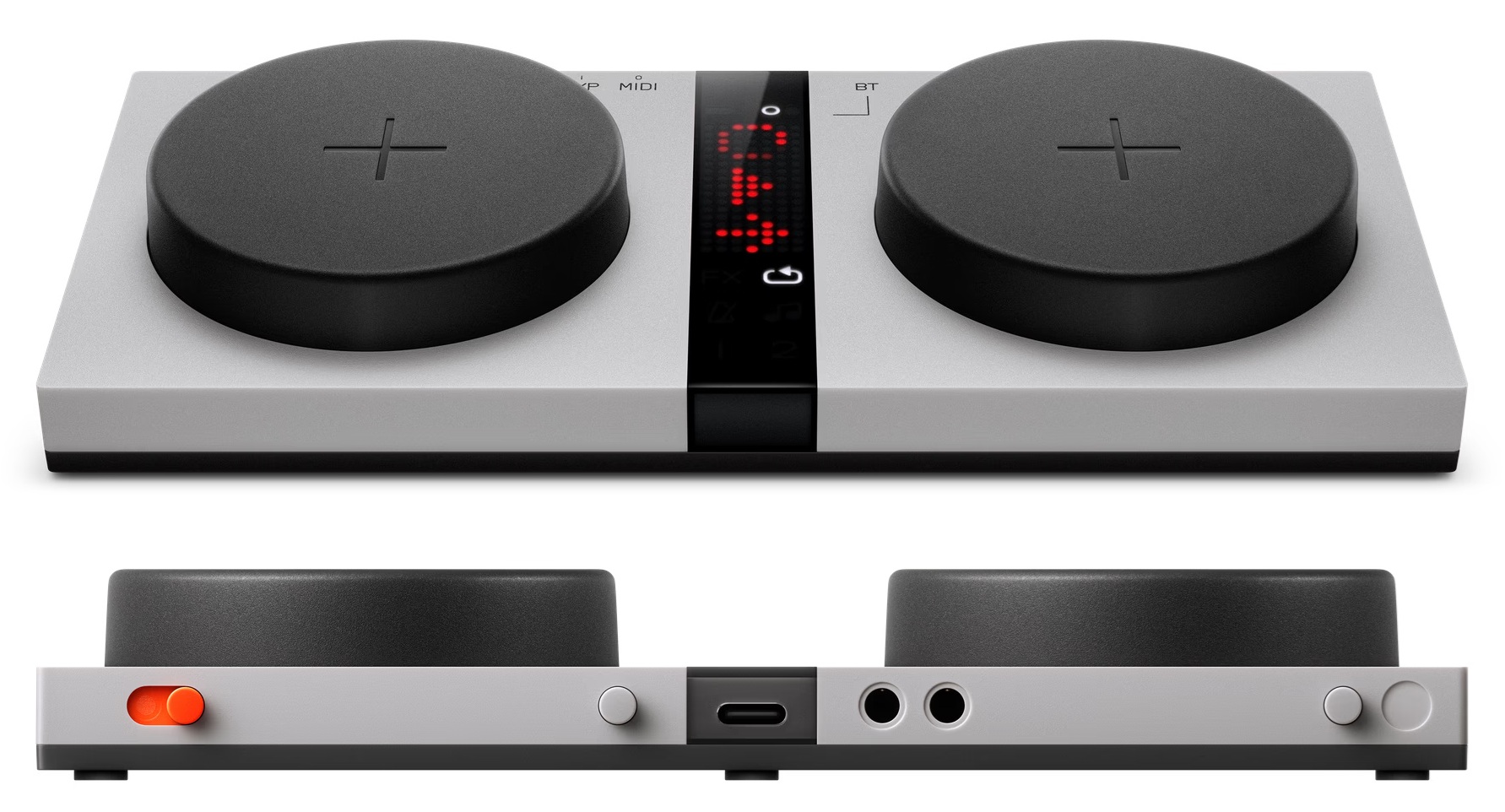
The two circular areas in the EP-127 K.O. PEDAL leak photo are pressure sensitive buttons for sending expression. Yep, the EP-127 has Bluetooth and! It includes a looper and a metronome. Basic specs from TE:

  • Wireless pedal controller for EP-35
  • Two pressure-sensitive buttons
  • FX, looper, metronome and playback control modes
  • Bluetooth LE and USB-C connectivity
  • MIDI and HID controller states
  • 3.5 mm expression pedal input
  • 3.5 mm MIDI out
  • Powered by 2x AAA batteries or USB-C
  • Dimensions: 176 x 84 x 26 mm
  • Weight: 0.2 kg

Teenage Engineering EP-127 K.O. PEDAL

As soon as I get a chance, I will dip into the K.O. Pedal and drop a few words about it. Its low price makes it a “no brainer.” The looper feature could be handy, especially if it retains loops in memory. I’m always trying to lighten my schlep and 0.5 pounds ain’t anything.

Winter holidays are coming…

I’ll close with a shameless plug for my EP-40 RIDDIM and EP-136 SIDEKICK PDFs.

Time passes…

Well, I did read the Teenage Engineering EP-127 K.O. PEDAL guide. I recommend reading it before buying to see if EP-127 is for you.

The big take-away: The EP-127 is first and foremost an accessory for the EP-35 K.O. AMP. The PEDAL itself does not possess looper, metronome or effects. Rather, the PEDAL controls the looper, metronome and effects inside the EP-35.

That makes the K.O. EP-35 AMP a sound beast that can loop, apply effects and so forth. It makes the EP-127 less desirable as it does not have any sound processing itself. TE don’t mislead; just be aware of what you’re buying.

The EP-127 can control external MIDI devices, instruments, modules and so forth (MIDI state). The PEDAL also can operate as a HID (Human Interface Device) controller (HID state), e.g., to flip screen pages. Again, read the MIDI and HID parts of the Guide carefully.

Out of the box, the EP-127 MIDI implementation is relatively limited. The MODE button cycles through four modes in the MIDI state:

Mode      Control/interaction        Channel CC/value range
--------- -------------------------- ------- ------------------
FX        Left button / force-press    1/2   CC#12 / 0-127
FX        Right button / force-press   1/2   CC#13 / 0-127
LOOP      Left button / press          1/2   CC#82 / 0 | 127
LOOP      Right button / press         1/2   CC#83 / 0 | 127
METRONOME Right button / press         1/2   Clock / Start | Stop
PLAYBACK  Left button / force-press    1/2   CC#1 / 0-127
PLAYBACK  Right button / force-press   1/2   CC#64 / 0 | 127

The EP-127 sends on either MIDI channel 1 or 2 (selected via the BT button). You can see that only the PLAYBACK mode is the most generally useful, sending modulation and sustain. The other MIDI CCs may or not be meaningful to the receiving MIDI device.

The EP-40 RIDDIM assigns CC#1 modulation to vibrate, CC#12 to FX parameter X, CC#13 to FX parameter Y, and CC#64 to sustain for key and legato voices. the EP-40 also should respond to CLOCK, Start and Stop. 3 modes out of 4 ain’t bad.

At the moment, the configuration is fixed. I hope Teenage Engineering will announce a configuration hack (via JSON?) like the effect hacks for EP samplers. Such a hack would make the EP-127 a more generally useful and desirable product.

Even better, it would be terrific if the EP-127 buttons could send MIDI notes. Those pressure sensitive buttons are dying to be finger-drum pads!

I always say, buy a product as it is today. Don’t buy something and hope for an update or a hack. In my own situation, I’m going to wait and see, especially since I have the Roland/Boss EV-1-WK among other options.

You may be curious about how EP devices dock to the EP-35 K.O. AMP, so here is one last snap.
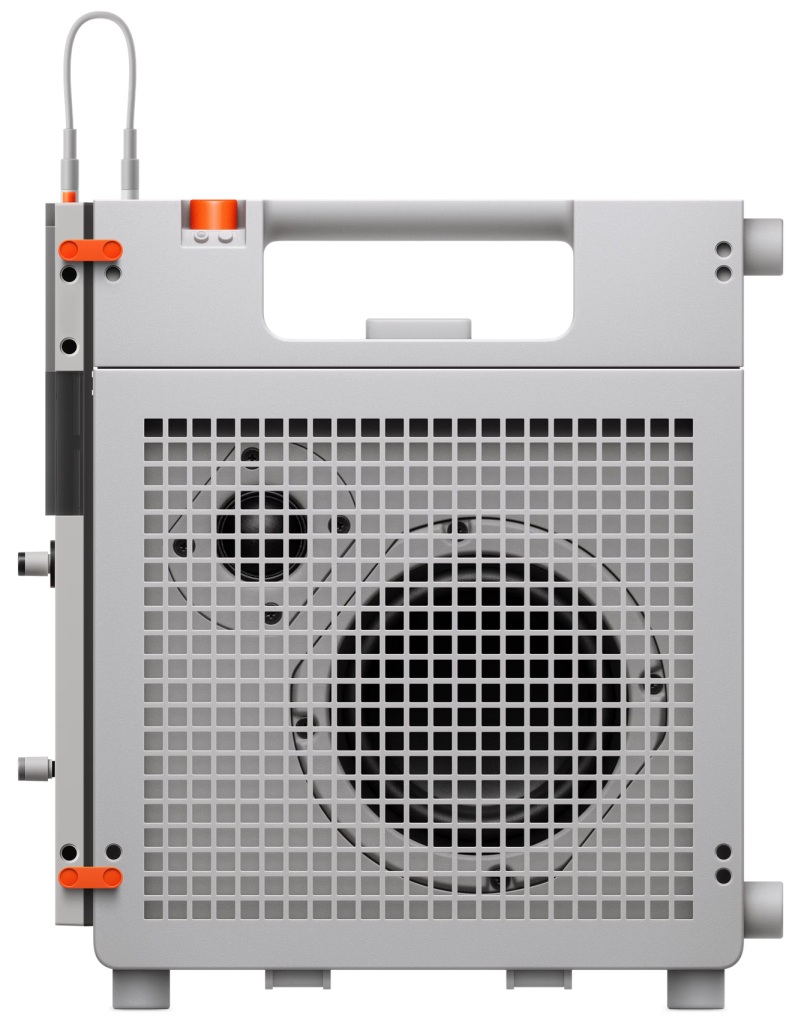
Teenage Engineering EP-35 K.O. AMP docked

The EP-35 form factor is designed to accommodate full- (e.g., EP sampler) and half-sized (e.g., SIDEKICK) EP devices. One hopes those pegs are strong! More and more, the K.O. AMP looks like a consumer product, not PRO.

Copyright © 2026 Paul J. Drongowski
Fall 2026 new stuff

I’m going to leave ancient keyboards behind (for a moment), and leap into the future. Well, the maybe future.

Dirty ca$h: CK76

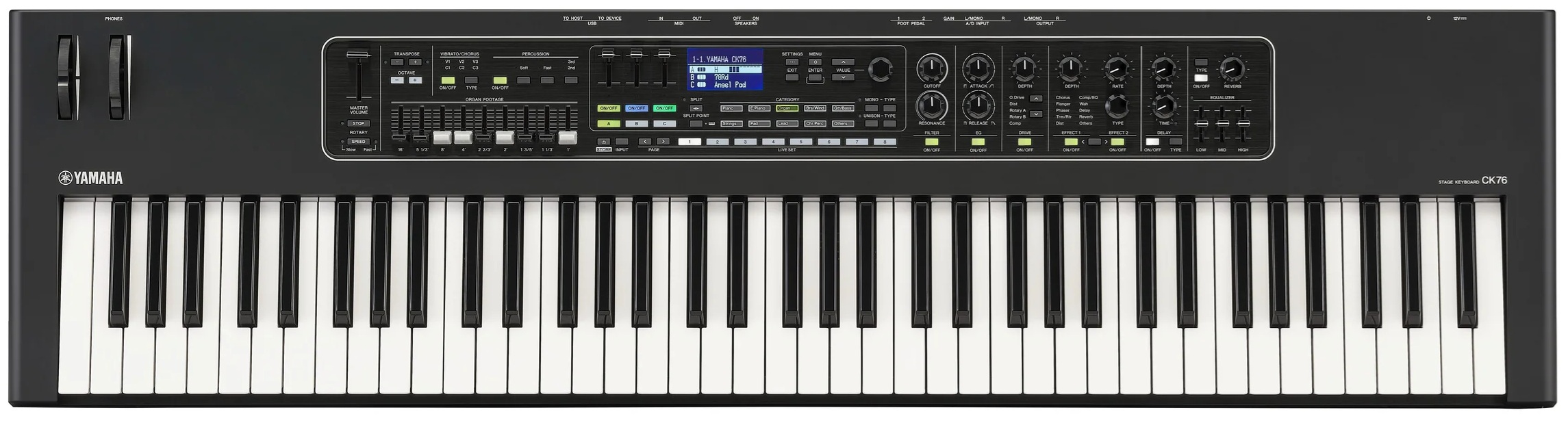
Update: CK76 is coming. Another slip of the tongue: “Positioned between the existing CK61 and CK88, CK76 addresses customer demand for a mid-sized performance keyboard that balances playability …” Advertised price: $1,249.99.

New Yamaha CK76 Stage Keyboard

Blake’s take: https://yamahasynth.com/learn/ck-series/blakes-take-introducing-ck76-ck-osv2-0/

Version 2 adds 3 new EP sounds and new Live Sets along with a few new features

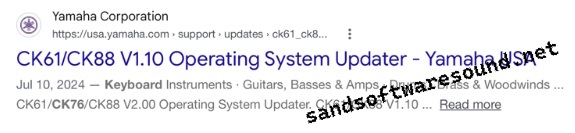
Every now and again, an Internet search barfs up a tasty tidbit. Perhaps the Yamaha CK page cache is dirty, but two new CK-related offerings may be on the way:

  • A new 76-key model, CK76, in the CK line-up.
  • A version 2.0 CK update.

Let’s hope so. The Yamaha CK is a great value for budget-minded punters.

CK76 — Dirty cash I want you

CK61 and CK88 were announced in early 2023. We are due for a model refresh AKA “life extension” for the CK product line. If they had a 49-key CK that weighs less than 8 pounds, I would buy one in a heartbeat.

Pedal to the metal

I’m a fan of Teenage Engineering’s K.O. gear. Not long ago, I bought a K.O. Sidekick, too — and yes, I owe you a review. 🙂

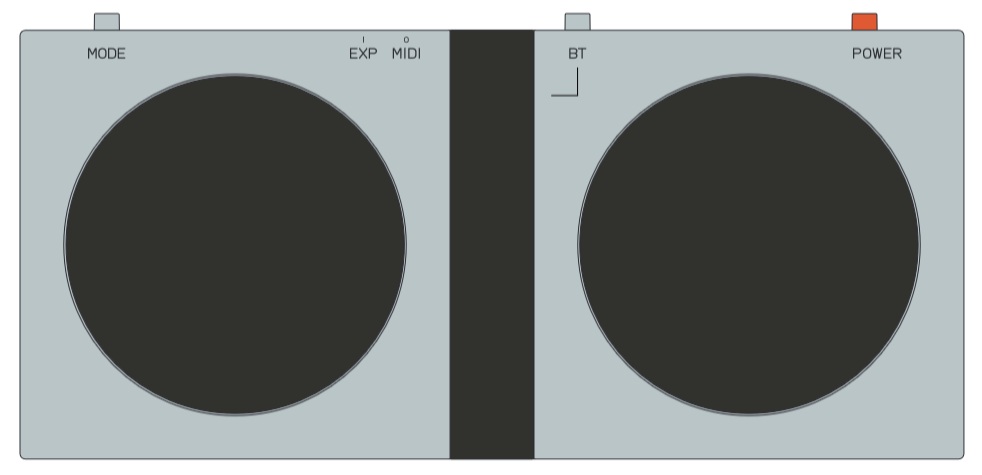
TE know how to tease a credit card, and now, pictures of an EP-127 K.O.-PEDAL are making the rounds.

The K.O. EP samplers are ripe for accessorization. There is, of course, K.O.’s serial MIDI IN and OUT. The “BT” button in the picture screams Bluetooth. Perhaps Bluetooth MIDI is coming in a future EP update? CME make the CME WIDI EP MIDI interfaces, so TE does not need to re-invent that wheel.

TE label their inputs and outputs with tiny “I” and “O” markings. The picture suggests an expression (pedal) input and a MIDI output — no MIDI IN.

If — IF — the power switch position is similar to the EP-40, then the K.O.-PEDAL is about 18cm wide and 9cm deep. That is not very big. Perhaps the circular-disks are touch pads? That might open up the possibility of finger drumming. TE likes control gizmos.

I don’t think the K.O.-PEDAL will be very expensive, so start saving your pennies.

A place for your cold one

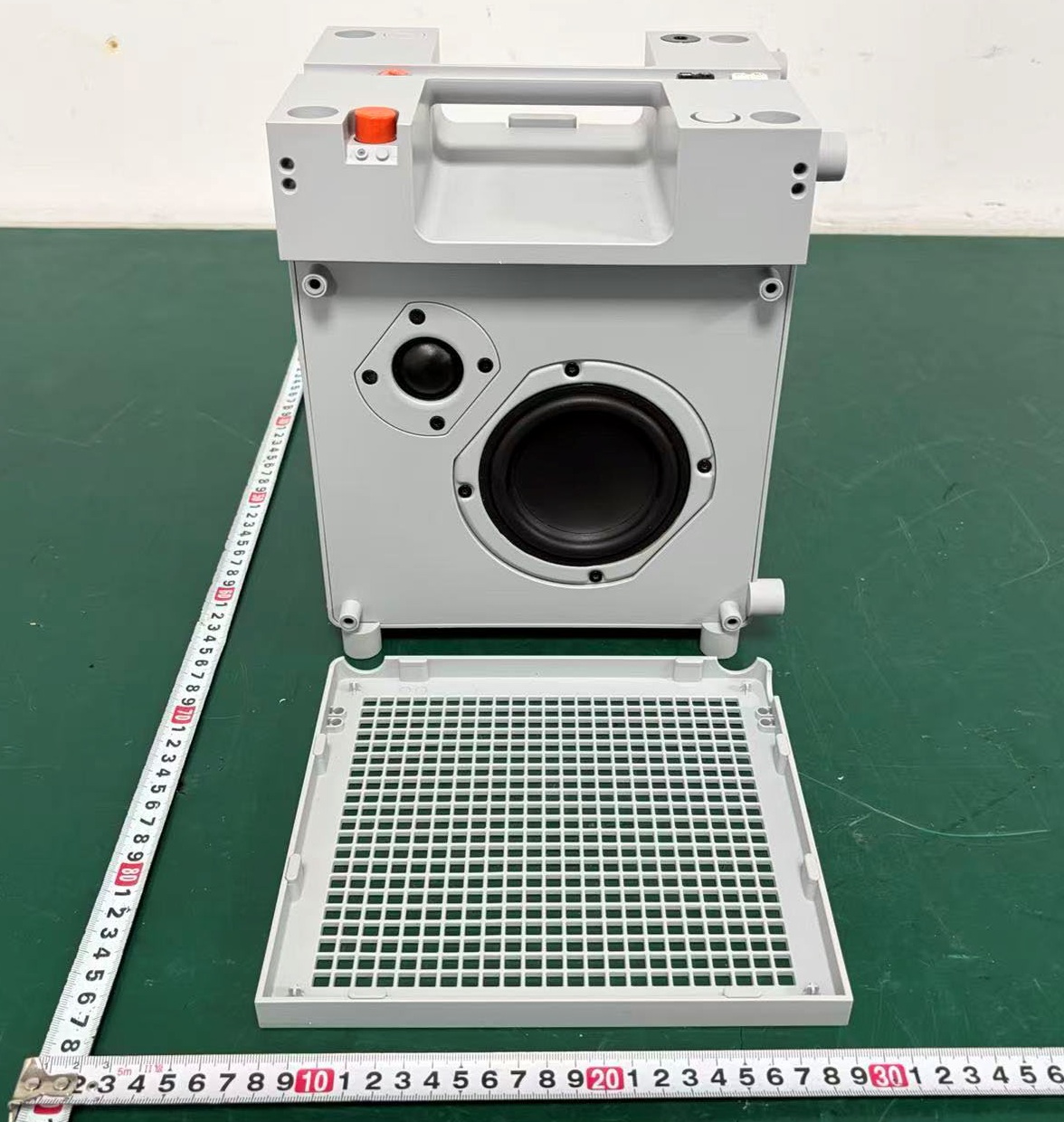
The other TE leak — and you have probably seen it already — is the TE EP-35 K.O.-AMP. It is a 35 Watt battery powered, portable instrument amplifier. There are many small personal instrument amplifiers like the Headrush FRFR-GO, Yamaha Stagepas 100BTR and a bajillion ultra-portable amps aimed at guitarists. Now TE will take the plunge.

Teenage Engineering EP-35 K.O.-AMP

The K.O.-AMP has LINE IN, guitar IN and XLR MIC inputs. There are MIC effects and guitar effects which can be dialed in independently (those funky thumb dials). All can be directed to the LINE OUT. The MIC XLR can supply 48V phantom power.

There are two physical USB Type-C ports: a computer/phone port and an “EP-PLUG” port (with its own MODE button). The main goes-in, goes-out and controls are on the top panel with several more controls hidden in the “storage compartment.” The EP-PLUG port supports USB audio devices, USB thumb (flash) drives and EP-PLUG accessories. The EP samplers got full USB audio with the last update, so I would expect the EP samplers and the EP-126 K.O. SIDEKICK to communicate with the amp over USB. The SIDEKICK would be a sick mixer for the K.O.-AMP.

In terms of wireless, there are Bluetooth audio and FM radio (true old skool wireless). The K.O.-AMP can broadcast audio to other K.O.-AMPs in Auracast mode. No doubt, all of this wireless stuff necessitated FCC testing and approval.

I think the K.O.-AMP is aimed at consumers more so than gigging musicians. Key specs are:

  • Frequency response: 50Hz – 20 Khz (-6dB) TBD
  • Max SPL @ 1m: 94dB (TBD)

That’s not a lot of bass and not very loud. You should plan on buying two for stereo.

Looking at the measuring tapes (centimeters!) in the picture, the front bezel is about 21cm wide and deep. Doing a little ratio magic, the speaker diameter is 10cm. The tweeter is 3cm.

TE gear is always fun and sometimes price-y. I don’t see the K.O.-AMP undercutting TE’s OB-4 portable wireless stereo speaker. The OB-4 sells for $580 to $680 USD. A pair of K.O.-AMPs should cost about the same — maybe $340 USD each?

Copyright © 2026 Paul J. Drongowski
Trim construction kit with Ableton Live

In my last post, I described the process of trimming audio stems for use on the Teenage Engineering EP-40 Riddim. The general procedure is:

  • Create a new project and set its tempo.
  • Import the audio stems (files) into time-aligned tracks.
  • Tweak the tempo to improve alignment.
  • Set loop points, listen and adjust.
  • Select the loop regions.
  • Trim and/or split to isolate the regions across all tracks.
  • Export the isolated regions to individual WAV files.

I demonstrated this process in action using (Cakewalk) SONAR Home Studio. Parenthetically, I thought that the same process could be applied in Ableton Live.

Well, I took my own challenge and finished off a construction set using Live. The audio loops and stems are part of the Renegade Audio (RA) Dub Invasion construction kit. Dub Invasion is Number 10 in the Renegade Audio Launch Pad series. Dub Invasion is 289MB of goodness and I had barely scratched its surface because manual trimming in Sound Forge Audio Studio is too slow and tedious. Sounds like the perfect test case for trimming via Live.

Just to be clear, I’m running Ableton Live Intro version 12.4.3. You don’t need the full Live Suite. The ubiquitous Lite version may be good enough, too, but I haven’t tested the same procedure with Lite. Lite comes bundled (free!) with many hardware products, so you may already have a Lite license.

Working with loops and one-shots in Live is a breeze. First, I created a new Live Set (project) and set the tempo 125 BPM. Then I dragged loops and one shots into Live’s Session View — you know, the place where you launch clips. Dub Invasions WAV loop and one-shot files are (generally) time-aligned at the beginning. Remix stems are aligned to the beginning of the (stem) song. If you’re going to snag audio from a stem, you will need to do a little more trimming.

Once you have the loops and one-shots pulled in, give them a try and see if they fit together. That’s the great thing about Live. It’s also fun to trigger clips and get ideas for how you might arrange them on the EP-40 Riddim. I needed to reduce the published BPM (125 BPM) by half (62.5 BPM) to get the right feel.

Audio loops in Ableton Live Intro

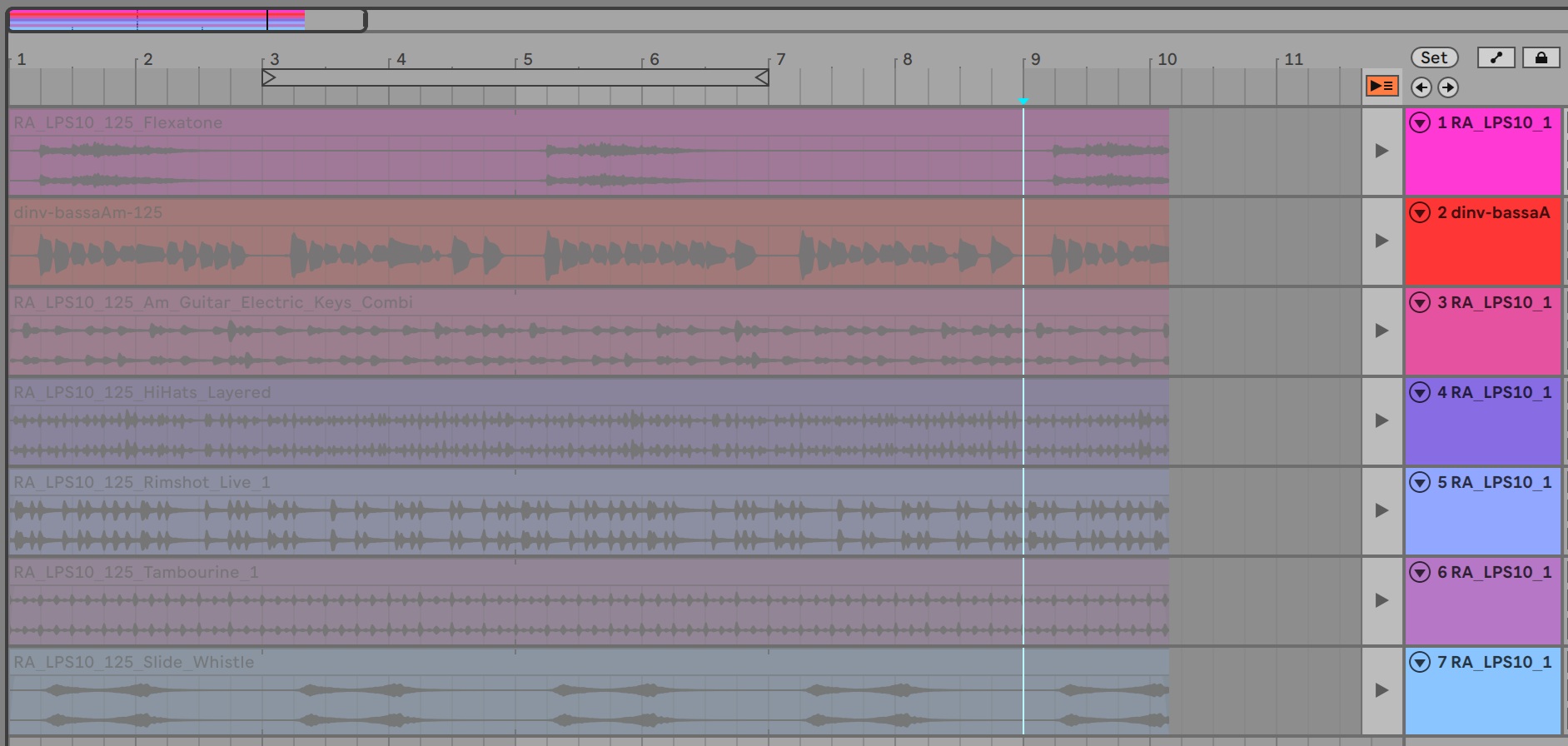
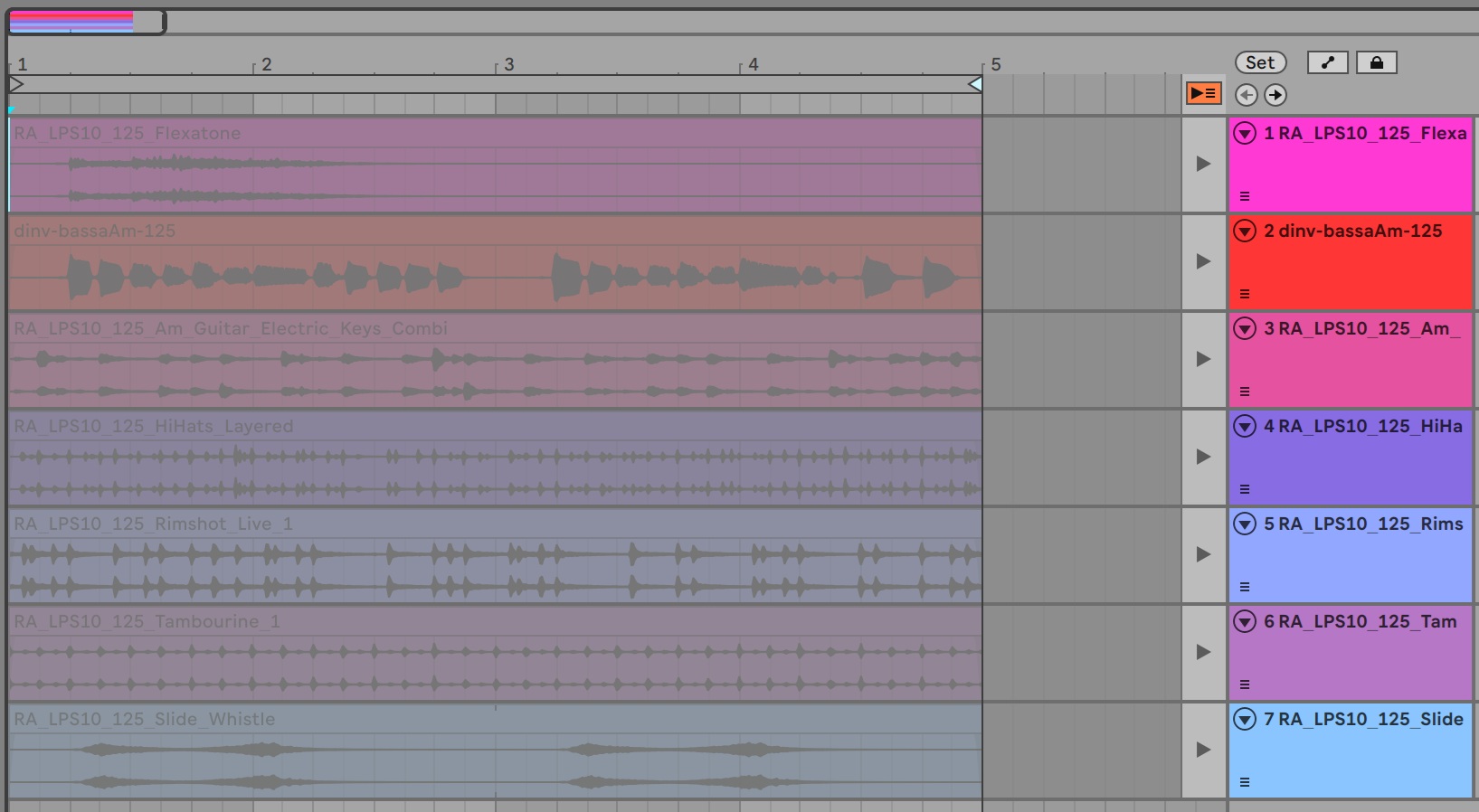
Next, I armed several loops in the Session View and switched to the Arrangement View. The Arrangement View displays typical DAW tracks (horizontal lanes). Then, hit record. Live will play the armed clips and record audio into the lanes. I ran off about ten measures of audio with the intention of trimming to eight bars (or less).

Loops trimmed and ready for export

With audio in the lanes, I created a loop by moving the start and stop braces in the time-line. Play the loop, listen and adjust. Keep in mind that longer loops require more memory. Be parsimonious.

It may be sloppy style, but I used the selection braces to choose measures that I wanted to delete from the end of the clips. I moved the braces to the beginning and end of the unwanted measures (time), selected all of the tracks, and deleted the selected time period. Then I re-adjusted the braces to select the loop/one-shot audio to be exported.

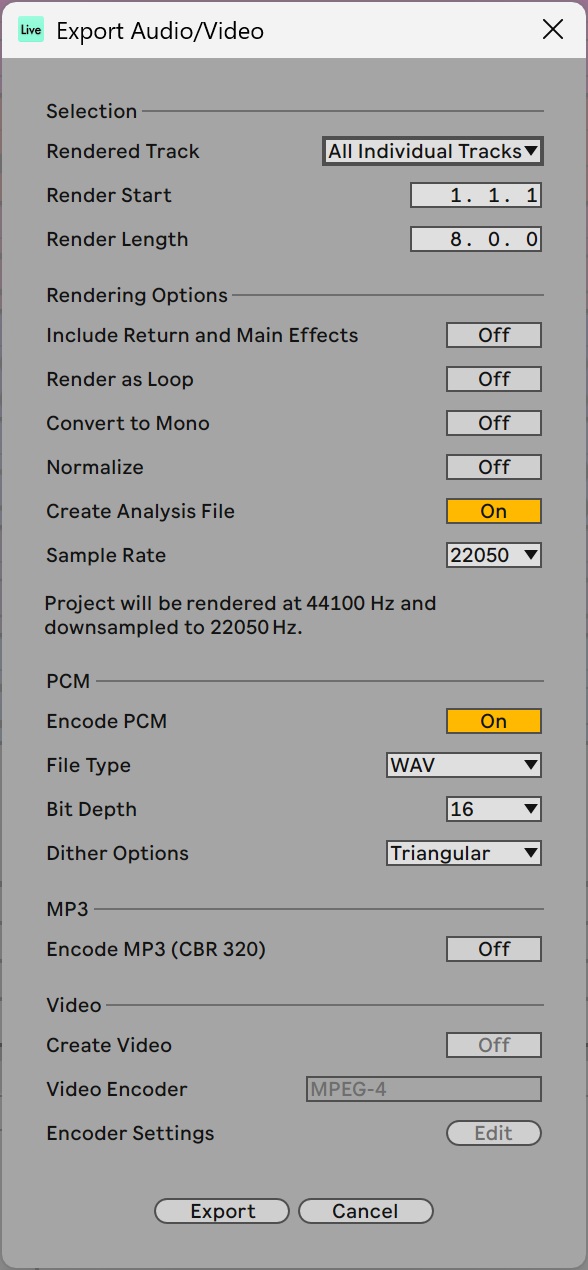
Ableton Live export options

As hinted, choose “Export Audio/Video…” in the File menu. Live pops up a dialog box where you set export options. I chose to render “All Individual Tracks”. That option produces one WAV file for each track. Set the starting point and render length. Set the sample rate (22,050Hz), file type (WAV) and bit depth (16). Optionally, you can create a Live Analysis File (ASD), too.

Click the Export button and navigate to the destination directory. Click the Save button and Live writes a WAV file for each track in the specified audio format.

Working in Live is faster than SONAR and much faster than manual editing individual files in Sound Forge. Going forward, I will be using Live.

Teenage Engineering sale

Here’s a time-sensitive reward for reading this far. Teenage Engineering is having a sale (30% off) until August 7, 2026. Browse to the Teenage Engineering site for details and the (secret) discount code. I ain’t telling.

If you would like to support the Yamaha Musician’s Forum, the Forum’s partner Thomann is participating in the sale. Make your purchase through the Forum and give the Forum a boost.

EP-40 Riddim PDFs

Don’t forget about my EP-40 Riddim PDFs. I swizzled and condensed parts of the on-line guide. Just recently added are two PDFs for the EP-136 K.O. Sidekick: basic operation and effects.

Copyright © Paul J. Drongowski