Yamaha MODX: A few more details

A few more pre-announcement details are coming out about the new Yamaha MODX synthesizer. Official prices will be announced tomorrow.

MODX6 MODX7 MODX8
Price 1,399€ 1,599€ 1,799€
Weight 6.6kg 7.4kg 13.8kg

For ‘mercans, that’s:

MODX6 MODX7 MODX8
MSRP (list) $1,649 USD $1,899 USD $2,399 USD
MAP (street) $1,299 USD $1,499 USD $1,899 USD
Weight 14.6 pounds 16.3 pounds 30.4 pounds

The current MOXF6 and MOXF8 weigh 15.6 pounds and 32.8 pounds, respectively. Nice to see a weight reduction.

The current MSRPs for the MOXF6 and MOXF8 are $1,499 and $1,999. So, we’re probably lookin’ at a slight price increase. At least we won’t have to purchase add-on flash memory boards.

Speaking of which, the Yamaha flash expansion boards are now totally dead end. If you’re negotiating for a MOXF, be sure to get your retailer to kick in a flash expansion board or two. Just sayin’.

The MODX Owner’s Manual is now available in the Yamaha manual library. Check your regional site.

Roland Drops a Keytar

I’m sure you’ve seen it elsewhere by now…

Special thanks to the chap who posted this image on Gearslutz!

9 pounds, eh? I’m still trying to get rid of my Les Paul copy. Too old for this… 🙂

I did have a chance to check the Roland Juno DS line. Nice mid-range product and can operate on batteries. I’m full up on Roland, so I’ll be passing it by. If you’re looking for a mid-range ‘board, give it a listen. The DS is respectable.

Yamaha MODX pictures

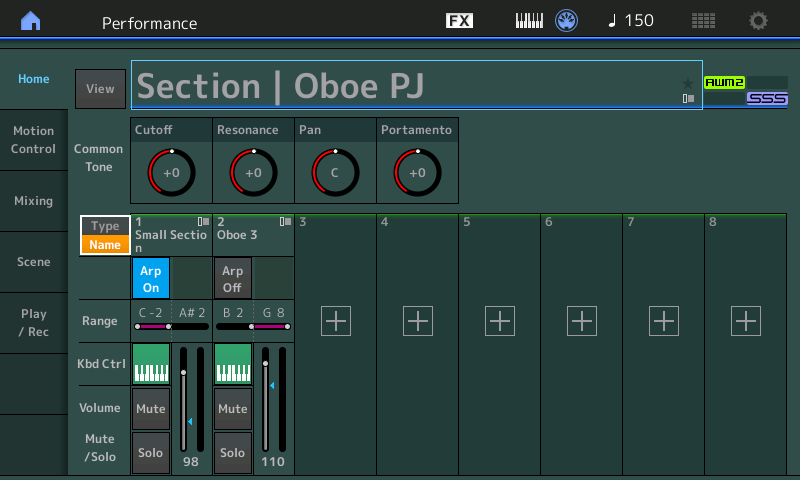
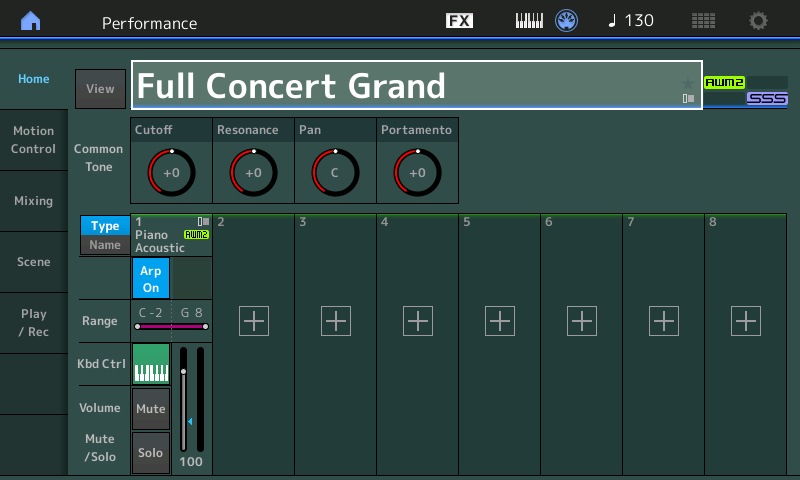
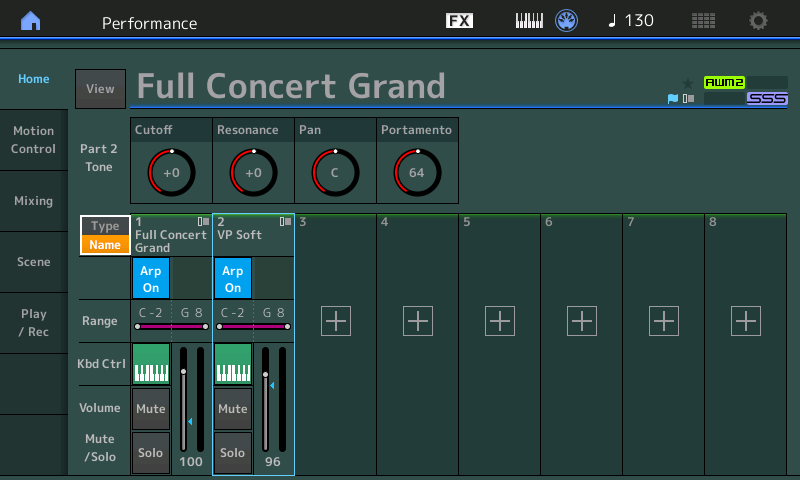
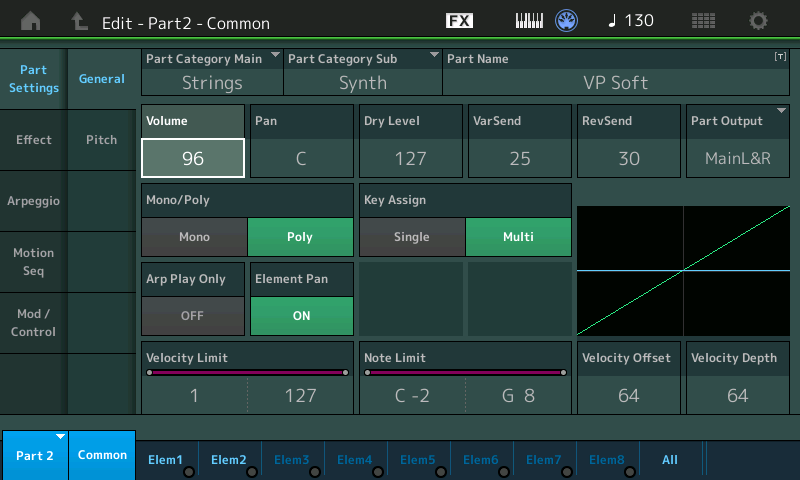
There are some very nice pictures of the new Yamaha MODX on AudioFanzine.com. Good close-ups of the front panel and screen.

Here’s a few additional thoughts to go along with my earlier comments about the Yamaha MODX.

Yamaha have moved the pitch bend wheel, modulation wheel and assignable buttons to the upper left. The MOX/MOXF places these controls just to the left of the keybed. Some users, including me, are not happy with the MODX placement. I use the assignable buttons quite a bit, especially for fast, one button changes to a patch. By fast, I mean très fast. My left hand holds down bass and taking my left hand off the keyboard creates a big sonic hole. Not happy.

I’m glad, as usual, to see transpose on the front panel. You never know when your singer is going to call for a last-second key change. Yeah, I know that I should be able to do that with head and hands… There’s enough stress at the gig already.

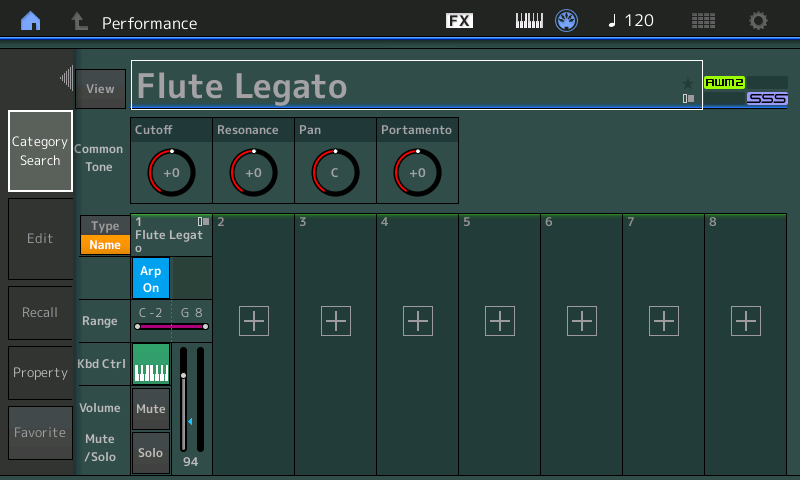
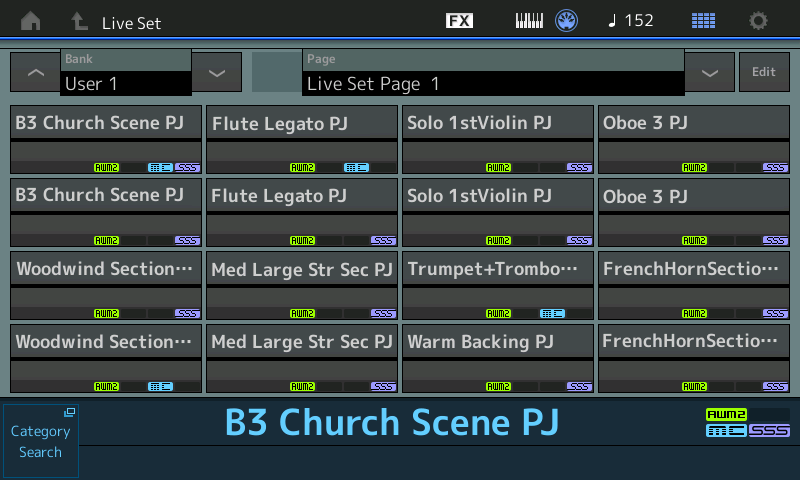
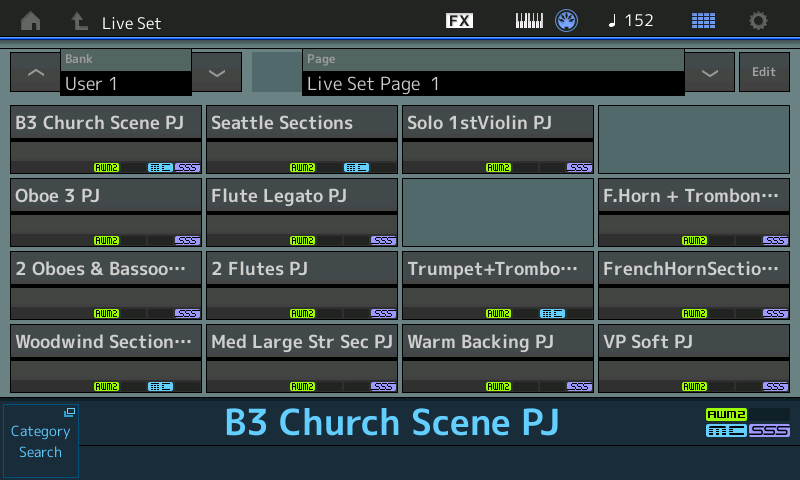
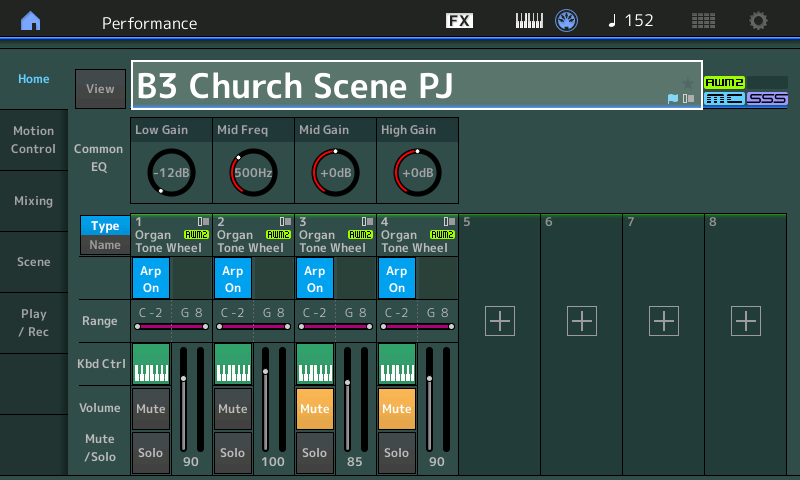
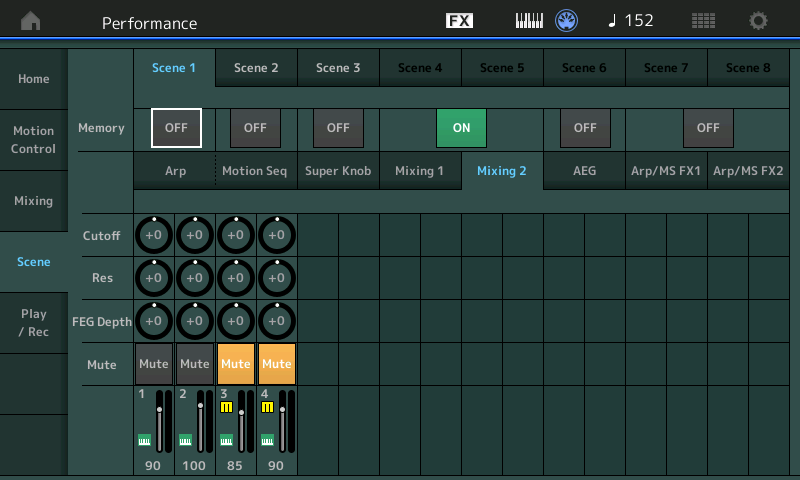
The pictures at Audio Fanzine remind me of the Montage Live Set feature. A Live Set is a group of sixteen performances arranged as a 4-by-4 grid of on-screen buttons. The buttons are big enough to poke while playing. I may not have to select a new patch via scene buttons as I originally thought. I guess we’re going to find out how big the buttons really are and how accurate I am as a poker.

By the way, if you want further insight into my thinking, check out my MOX6 Retrospective.

Copyright © 2018 Paul J. Drongowski
Korg EK-50: Meh

As I mentioned in my last post, both Roland and Yamaha have new product announcements and events scheduled for this week (September 13 and September 14, respectively). No Roland rumors to far, but there was a slip uncovering the Yamaha MODX.

The holiday sales musical instrument sales season seems to have come early this year, with Korg revealing the EK-50 Entertainer Keyboard.

When I first saw the EK-50 on Musicradar, I was intrigued. Here would be Korg’s entry into the $400 USD and under, entry-level arranger market. The first YouTube videos dashed that hope. I still cannot flush the sound of this thing from my ears.

The EK-50 is a sonic stink bomb. The voices and styles are horrible. If you read the articles on this site, you’ll know that I’m pro-arranger as well as pro-synth. So, my opinion is not pre-biased against arrangers. I’m not biased against Korg, either. At any given time, you’ll find either a MicroKorg XL+ or Triton Taktile right next to my main PC. You never know when you’ll need to noodle or learn a new tune while playing with an on-line track. I’ve also dipped into the entry-level with the Yamaha PSR-E443 — no illusions about buying a Genos™ for $400. I even gave the Roland GO:KEYS an honest trial.

I do not get equipment for review from manufacturers. I do this with my hard-earned cash, like you.

Korg say that the EK-50 is not an arranger. It’s an “Entertainer Keyboard.” News for Korg, if it quacks like a duck and plays like a duck, it’s a duck. I’ll bet that Korg marketing knows that the EK-50 is a sonic dud and doesn’t want shade thrown on the well-regarded Pa professional arranger line of keyboards.

I would like to see more innovation at the entry level. Even though I had issues with the GO:KEYS keybed, I have to give props to Roland for the GO:KEYS sound engine and phrase-based approach to backing. Let’s see more of that instead of warmed over styles from yesteryear with the occasional, gratuitous EDM loop thrown in.

Sometimes, you gotta know when to kill a product.

Copyright © Paul J. Drongowski

Yamaha MODX vs. Montage

I’m pretty well convinced that the Yamaha MODX leak is legitimate.

BTW, I think Yamaha will pronounce the name “MO D X” to reflect a continuation of the MO heritage and to emphasize the FM-X technology by recalling the DX synth line.

Here’s a quick table comparing MODX versus Montage. There are still a few blanks in the table which need to be filled out.

Feature MODX Montage
Display 7″ WVGA color TFT 7″ WVGA color TFT
AWM2 poly 128 128
FM-X poly 64 128
SSS 4 parts 8 parts
Faders 4 8
Encoders 4 8
Buttons 4 8
Ribbon No Yes
USB audio in 4 channels (2 stereo) 6 channels (3 stereo)
USB audio out 10 channels (5 stereo) 16 channels
Sampling frequency 44.1kHz Up to 192kHz
ADC inputs 2 2
Dual insert effects 12 parts+A/D 16 parts+A/D
Waveforms 6,347 6,347
Waveform ROM 5.67GB 5.67GB
Flash ROM 1.00GB 1.75GB
User Performances 640 640
Library Performances 5,120 5,120
Scenes 8 per Perf
Arpeggios 10,239 10,000+
Simult Arp 8
MIDI IN,OUT IN,OUT,THRU
Output Unbalanced Balanced
Keyboard Synth FSX
Aftertouch No Yes
Weight 61-key 14.6 pounds 33.1 pounds

Of course, the important question is, “How much of the Montage did Yamaha leave out?”

First, let me say, you do get a lot. The MODX has full fat waveforms, arpeggios and performances (including voices in the flat Yamaha user interface world). Having heard and played the Full Monty, I will definitely be looking at the MODX to replace my MOX6, especially if the MODX6 weighs in at roughly the same weight.

There have always been differences between the top-of-the-line (TOTL) synth and its mid-range brother. The Montage has a metal chassis, balanced outputs, internal power supply (AKA “AC power”) and an FSX keybed with aftertouch. Therefore, I expected a plastic chassis, unbalanced outputs, external power supply and a synth action (61-key model) without aftertouch. Given the history of the MO product line, one could also expect fewer sliders, knobs and buttons. I’m glad to see the return of sliders, by the way. The plastic case of the MOX6 has held up rather well and usually guitars walk away worse for wear when they collide with the MOX6!

At this price point, I wouldn’t expect Pure Analog Circuit (PAC) audio either. I’m still a little surprised that the Genos offers TOSlink in place of PAC, BTW.

Thankfully, Yamaha did not skimp on the display. It’s the same 7″ wide VGA color TFT. I suspect that the Montage and MOXD share the same software code base, which was not true of the Motif XS/XF and the MOX/MOXF. The MODX has the same number of user and library performances. All of this parity is great news for the end user.

The MODX audio spec is cut down from the Montage. I expected this, too, knowing about the internal architecture of the Montage. The Montage has a dedicated SSP2 integrated circuit (IC) for audio routing and USB interface. This is like having a Steinberg UR44+ in the guts of your studio synthesizer. Thus, the MODX (probably without the SSP2) has fewer USB audio input and output channels. Although the leak doesn’t reveal the sampling rate, I doubt if the MODX will do 192kHz. [I wouldn’t mind being wrong about this doubt.]

The leaked write-up suggests that the MODX has the same effect algorithms as the Montage. The number of dual insert effects is lower in the MODX: 12 parts plus A/D input versus the Montage’s 16 parts plus A/D input.

I suspect that the number of parts per performance has been reduced from sixteen to eight. The front panel buttons provide access to eight elements (as expected with AWM2) or eight parts. Seamless Sound Switching (SSS) is supported for performances with up to 4 parts (versus 8 Montage parts). Take this speculation with a grain of salt as it’s trying to read between the lines of the write-up.

It is true, however, that the four sliders, encoder knobs and buttons are shared across eight parts or elements. Each control type has a button to select between group 1 to 4 and group 5 to 8.

  • With four sliders, don’t expect to go all “Hammond” with drawbars.
  • With four immediately accessible scenes (i.e., without making two button presses under live fire), don’t expect to jump across more than four voices on the fly.

The second concern is a serious one because Yamaha ditched a whole raft of buttons from the right hand side of the front panel (cost saving!) I currently rely on the MOX buttons to select among sixteen voices on the fly. This is important to me because I’m holding down bass and melody lines with our trio. I must make fast patch changes or something gets dropped musically.

The only place where I feel like Yamaha gratuitously tiered the Montage over the MODX is expansion flash memory. The expansion flash memory is the left over flash ROM capacity beyond the factory sound set. Trust me, Yamaha is not saving money by cutting this spec — it is a marketing decision.

There is so much yet to learn about the MODX. I’m hoping that Yamaha retained the deep performance (voice) editing from the Montage. The leaked write-up does not mention a “performance recorder,” so this is a total blank spot, too. Pricing for all models is yet known. Yamaha may sell the MODX at a premium versus the MOXF until the old MOXF stock is sold.

At this stage, I’m quite pleased. My MOX is going strong and makes it to the gig every Sunday. However, I have tasted the future with Genos™ and look forward to trying the Yamaha MODX.

Copyright © 2018 Paul J. Drongowski
Do you question?

The latest hot rumor. Do you question whether this is real or a hoax? An on-line retailer is running the text below with a price of 1,399 British pounds for the 76-key model. The Keyboard Magazine Forum has a picture of a 61-key model. Real or not?

I’ll post more thoughts later. I’ve gotta gig in an hour…

[Update: Please see my MODX vs. Montage comparison.]

[Previous update: Very likely real. Amazon accidentally posted a page for an 88-key model. The page is no longer active.]

AWM2 Synthesis Engine and FM-X Technology

The AWM2 acts as the heart of the synthesizer. The AWM2 (Advanced Wave Memory) synthesis engine is exclusive to Yamaha synthesizers, renowned for its versatility and sound design capabilities. The AWM2 provides processes both samples and synth sounds, providing ultra-realistic emulation of acoustic instruments, digital sounds and drums.

The FM-X (Frequency Modulation) section provides unique and expressive ways to create synth sounds. The highly-programmable technology provides the means for dynamic, electro-modern music creation. It can create everything from 80s synth sounds to cutting-edge EDM leads. The unique technology provides an 8-operator FM architecture with 64-note polyphony and a wide variety of filter types.

Semi-Weighted Keybed and Versatile Performance Controls

The MODX7 features a 76-note semi-weighted keybed, providing fluid playability. The semi-weighted keys provide added expression, emulating the feel of a traditional piano. The AWM2 engine delivers 128-note [?] polyphony and 64-notes of FM-X polyphony, opening up a new world of possibilities for creating sounds.

A wide range of performance controls are included, ideal for live sets and for use with music production. Empower your creativity with versatile controls for virtually every parameter.

The Super Knob is a highly unique control, acting as a virtual conductor for your music. It directs individual dynamic elements into a signal control. It provides simultaneous control of up to 128 parameters within a single performance. This gives you the ability to mix functions such as Volume, Pan, Effect and other parameters such as Filters, LFOs and more.

Four additional faders and encoders are included. These can be assigned to different functions and used for hands-on control of settings. Between each slider (fader) is a Scene button, It features eight Scenes which can be for different assignments such as Motion Sequence, Arpeggio Select number and even complete mixing. A range of transport controls are included, as well as a modulation and pitch wheel.

Integrated Premium-Grade Effects

A wide range of premium-grade effects are included for adding flare to your sounds. From high-definition Reverbs to Virtual Circuit Modelling effects, the powerful DSP engine delivers unparalleled audio fidelity and performance.

The effects range from standard delays and compressores to cutting-edge effects such as Beat Repeat, Vinyl Break or Bit Crusher. The specialised Spiralizer effect creating the sonic illusion of a tone rising or falling in pitch. There is even a Compression with a sidechain, allowing you to achieve the modern-day ducking effect.

Built-In USB Audio Interface

Aiding modern-day computer-based production, the MODX7 features an integrated 2-in/10-out multi-channel USB audio interface. The high-grade interface is coupled with two A/D inputs, making the MODX the perfect choice as a centrepiece in any studio or live setup. It provides single-cable connectivity, and even works with your favourite iOS device.

Envelope Follower and Motion Sequences

The Envelope Follower converts audio into a control source for virtually any synth parameter. For example you can use a drum loop to drive an effects parameter for a unique rhythm and/or vocal recording.

Motion Sequences give you the ability to create tempo-synchronised sequences which can be assigned to any parameter. This opens up new way to control rhythms and sound. It also features dedicated controls on the front-panel, allowing for real-time manipulation.

Ergonomic, Lightweight and Portable

The sleek and streamlined design is highly portable, making it ideal for live performances and studio sessions. The ergonomic layout is split into various sections allowing you to easily navigate between parameters, settings and sounds. The large LCD touch-screen provides a hands-on approach to accessing sounds and files. The Waveform-Rom of the synthesizer has been expanded from 741MB to 5.67GB. It also provides Seamless Sound Switching (SSS) for performances with up to four parts.

The compact and lightweight design makes it easy to transport. A dedicated transport case is available for the MODX, so you can transport your synth with maximum protection and comfort. The rear of the synth features a variety of connections. A foot switch/sustain output is available for incorporating expression pedals. There are also connections available for A/D input, as well as USB connectivity for USB to Device and USB to Host.

Features

  • AWM2 (Advanced Wave Memory 2) sample and synthesis engine
  • 76-note semi-weighted keybed for fluid playability
  • Unparalleled sonic versatility for creating sounds from iconic 80s sounds to modern-day EDM cutting-edge leads
  • Integrated performance controls include faders and encoders for in-depth control over parameters
  • Ideal for both studio and stage use
  • FM-X Synth Engine
  • LCD-Touchscreen 7″-Colour-Wide-VGA-TFT
  • Waveform-ROM expanded from 741 MB to 5.67 GB
  • 2,370 new Waveforms, 6,347 total in ROM
  • 1 GB Flash-ROM built-in
  • Ca. 2,000 preset performances
  • 640 user performances
  • 5,120 library performances
  • Seamless Sound Switching “SSS” for Performances with up to four Parts
  • 13 dual insert effects (12 Parts + A/D Input)
  • Over 256 preset live set slots, 2,048 User & 2,048 library live set slots
  • 10,239 arpeggios
  • Eight arpeggio Parts simultaneously
  • Eight Scenes per Performance
  • Master keyboard functions for each Performance
  • Multichannel USB Audio Interface, 2-in/10-out

Mobile Music Sequencer revisited

Yamaha Mobile Music Sequencer (MMS) is an app that doesn’t seem to get as much love as it deserves. MMS is a rather complete MIDI sequencing tool to create new songs using a phrase-based approach. (Cost: $15.99USD) The MMS user interface has a superficial resemblance to Ableton Live. It has a phrase screen which lets you assemble preset or user phrases into song sections, e.g., phrases that play as a group. Once you have one or more song sections, you then assemble the sections in the linear song screen. You may also create new phrases of your own in a piano roll editor/recorder and you may record solos and such directly into a song track.

MMS includes an XG-architecture sound engine although the voice set is limited to a General MIDI (GM) subset and a collection of MMS-only voices. Voice quality is “just OK” and may be why MMS adoption is slow. However, as I’ve recently discovered, there are a few hidden gems like a Mega Voice clean electric guitar! DSP effects are basic and follow the XG effects architecture. I have summarized the sound set, DSP effects, etc. on my Mobile Music Sequencer Reference page.

Of course, you can mixdown and export full audio songs from MMS. MMS supports SoundCloud, Dropbox, and iTunes file transfer. You can also export a song to a Standard MIDI File (SMF). The SMF has eight parts — one part for each of MMS’s eight song tracks. If you choose one of the supported targets (Tyros 5, Motif XF, MOX, etc.), MMS inserts bank select and program change MIDI events to select an appropriate voice for each track. Unfortunately, MMS doesn’t export volume, pan or effect data, so the resulting SMF is quite naked. Ooops! This is one area where MMS could be and should be drastically improved.

MMS’s voicing for Tyros is not very adventurous. On the up side, SMFs targeted for Tyros should work quite well on other PSRs, too. There is one voicing issue which should be fixed. The MMS clean electric Mega Voice (“Clean Guitar 2”) should be mapped to the good old PSR/Tyros clean guitar mega voice. Right now, it’s mapped to the regular clean guitar voice and the guitar FX sounds are whack.

Yamaha have rather quietly enhanced MMS’s capabilities. MMS is now up to version 3, including chord templates, extraction of chord progressions a la Chord Tracker, and more. The last minor update made MMS compatibile with Apple iOS 11. I hope Yamaha add Genos and Montage support because MMS can communicate directly (via wired MIDI, Bluetooth MIDI or wireless LAN) to its supported synths and arrangers.

Given the amount of kvetching about the shortcomings of the Montage sequencer, I’m surprised that more Montage people haven’t picked up MMS. Same for Genos or PSR, for that matter. Maybe its the lack of direct Montage or Genos support?

Where you from, boy?

Recently, I got the itch to create a few new PSR-compatible styles. I’ve always felt that MMS would make a good base for a style editor. You can quickly slam together phrases into a song section and see if they play well together. (Same as Ableton Live, I might say.) I mix and match phrases into song sections then export the sections to an SMF. Each MMS song section is a PSR style section (MAIN A, MAIN B, etc.) I load the SMF into a DAW where I add style section markers, SysEx set-up data, volume, pan, etc. When satisfied, I add a style CASM section using Jørgen Sørensen’s CASM editor. [Be sure to check out all of Jørgen’s excellent tools.]

Given the content, I can just about do this in my sleep. It’s a fairly mechanical process once you understand it and do it, say, fifty times. 🙂

About that content…

MMS comes with ten styles (i.e., groups of phrases) in the initial download. Please see the table at the end of this article. The ten styles are rock and pop. If you’re looking for R&B, dance, jazz, electronic or hip-hop, you’ll want to buy one of the content packs offered as an in-app purchase. I’ve include a table for these packs, too, at the end of the article. The genre packs are $3.99USD each. Yamaha also offer the multi-genre QY pack ($7.99USD) with phrases taken from the Yamaha QY-70 (QY-100) handheld sequencer. I did a little QY-70 mining myself.

Now for the usual Yamaha archeology…

The “MM” in “MMS” is a little bit ironic. The MMS phrases are lifted from the (infamous) “Mini Mo” mm6 and mm8 keyboards. The Mini Mo touted voices taken from the Motif series, but the mm6 and mm8 didn’t really know if they wanted to be an arranger or a synthesizer. In that regard, the Mini Mo is a unique functional hybrid in Yamaha’s bipolar world. (“You’re either a synth or you’re an arranger.” Digital pianos excepted, of course.)

So, yep, MMS offers almost all of that old (ca. 2006) Mini Mo goodness. You don’t get the fun ethnic patterns (Turkish, African, Indian), tho’.

If you break into your rich neighbor’s house to steal his stereo, you might as well take the TV set, too. The Mini Mo arpeggios are incorporated into the the Yamaha Synth Arp & Drum Pad app. If you still can get the Synth Arp & Drum Pad app, snag it right away. It’s being discontinued.

How does it sound on Genos?

Not bad. Even though the target voices are rather vanilla, an MMS-derived style on Genos sounds pretty darned good.

List of MMS drum kits

Bank MSB Bank LSB Prog# PC# Drum kit
7FH 00H 1 00H Standard Kit
7FH 00H 26 19H Analog T8 Kit
7FH 00H 27 1AH Analog T9 Kit
7FH 00H 28 1BH Dance Kit
7FH 00H 41 28H Brush Kit
7FH 00H 84 53H Break Kit
7FH 00H 85 54H Hip Hop Kit 1
7FH 00H XX xxH Hip Hop Kit 2 (Hip Hop)
7FH 00H XX xxH Hip Hop Kit 3 (Hip Hop)
7FH 00H 88 57H R&B Kit 1 (R&B)
7FH 00H 89 58H R&B Kit 2 (R&B)
3FH 20H 1 00H SFX Kit
3FH 20H 2 01H Percussion Kit
7FH 00H XX xxH Dubstep Kit (Electronic)
7FH 00H XX xxH Elct.Dub Kit 1 (Electronic)
7FH 00H XX xxH Elct.Dub Kit 2 (Dance)
7FH 00H XX xxH Epic FX (Electronic)
7FH 00H XX xxH Gate Drum Kit (Electronic)
7FH 00H XX xxH Short FX (Electronic)
7FH 00H XX xxH New Pop Kit (Dance)
7FH 00H XX xxH Trance FX Menu (Dance)
7FH 00H XX xxH Trance Power Kit (Dance)

List of styles

The following preset styles are installed with Yamaha Mobile Music Sequencer when you buy MMS.

Category: Rock/Pop Jazz/World
BluesRck Funky Jaz
ChartPop JzGroove
ChartRck Reggae
FunkPpRk
HardRock
PianoBld
PowerRck
RkShffle
RockPop
RootRock

Here are the styles included in each optional, in-app purchase pack:

R&B Electronic Dance HipHop
IzzleRB Ambient Dncehall AcidJazz
JazzyRnB Analog Dncfloor Amb Rap
RB Chrt1 Chillout E-Disco ButiqHH
RB Chrt2 Dubstep E-DubPop EastRap
RnB Bld1 ElctDub EleDance HipHopPp
RnB Bld2 Electron ElktPop1 JazRemix
RnB Pop1 Minimal ElktPop2 SouthRap
RnB Pop2 Techno FunkyHse WestRap
RnB Soul Undrgrnd LatinJaz
M-Trance

Copyright © 2018 Paul J. Drongowski
Baby’s are cute!

I have got to get me one of these for my Yamaha Reface YC. Cost (12,000Yen / $108USD) is no object. 🙂

Quoting Suzuki:

The Baby Leslie Bluetooth speaker inherits the look of the original Leslie 122 speaker, developed exclusively for Hammond Organs.

Although the “Baby Leslie” does not provide the Rotary Effect of traditional Leslie Speaker Cabinets, its omnidirectional sound system, including a passive radiator, brings brilliant highs and rich lows, reflecting the heritage that the Leslie Brand is famous for.

An added fun feature uses illuminated LEDs to simulate the look of the spinning horn rotor atop all classic Leslies. The badge and name plate have been recreated from the original Leslie Logo, and the look of real wood offers a touch of vintage style.

See the quasi-demo video and the Baby Leslie leaflet (PDF).

A Google search turns up Suzuki’s application to the FCC. Soon, soon!

Unfortunately, the Baby Leslie does not have an analog audio input — it’s only Bluetooth. Here’s a snap of the BT-122 control panel (click to enlarge).

I’ll add a Bluetooth transmitter to the Reface YC (with the lousy Bluetooth audio latency) or I’ll hack the speaker itself to add an audio input. Another manufacturer who doesn’t “get” their own product and will lose sales because they cheaped out on a connector…

Copyright © 2018 Paul J. Drongowski
[Update: Upon further thought, with its SBC codec, latency will be around 100 to 150 msec — too much for live play. Either Suzuki add a LINE IN, or it’s time to break out the soldering iron and mod.]

All is swell (SWL)

Yamaha develop a wide range of keyboard products from low-cost entry-level ‘boards to high-end synthesizers and digital workstations (AKA “arrangers”).

Within a market segment, the engineering challenge is to develop, manufacture and test a product with the desired feature set at the target selling price. I won’t discuss profit margin here since no one really knows, but Yamaha. We do know, however, that amortized non-recurring and recurring costs must be low enough to produce a significant return. Cost sensitivity is simply a day-to-day reality.

The entry-level segment is the most cost-sensitive segment because most customers in this segment are looking for an inexpensive keyboard with basic functionality. Think “Parents buying a first keyboard for a kid who may walk away from the whole thing in a week or two.” The entry-level segment outsells the mid- and high-end portable keyboard segment by nearly 2 to 1:

    Category                       Units            Retail value
    -----------------------------  ---------------  -------------
    Acoustic guitars               1,499,000 units  $678,000,000
    Electric guitars               1,132,000 units  $506,000,000
    Digital pianos                   135,000 units  $165,000,000
    Keyboard synthesizers             81,000 units  $104,000,000
    Controller keyboards             160,000 units  $ 32,000,000
    Portable keyboards under $199    656,000 units  $ 64,000,000
    Portable keyboards over $199     350,000 units  $123,000,000
    Total portable keyboards       1,006,000 units  $187,000,000

    Sales Statistics for 2014, USA market

Synth fanatics should note that although the average selling price (ASP) is higher for synths, the portable keyboard segment moves a much higher number of units. Fortunately, for manufacturers playing in the entry-level portable keyboard space, volume is relatively high and non-recurring cost can be laid off across a larger number of units than synths.

The entry-level segment has one other important driver — the desire for portable, battery operation. This design consideration limits the amount of electrical power available for computation and thus, limits the amount of computational capacity itself. Some dynamic power can be bought back through lower CPU clock speeds. Folks accustomed to giga-Hertz CPUs may be shocked to see such low clock speeds! Lower clock speeds simplify cooling and reduce overall weight by eliminating heat sinks and cooling fans.

LSI vs. commodity

Yamaha perceive their proprietary expertise in large scale integration (LSI) as a competitive advantage. Although Yamaha exploit commodity components where possible, tone generation and digital signal processing (DSP) are performed in proprietary hardware.

User interface and control (e.g., USB communications, MIDI, LCD, etc.) are a good fit with commodity CPU technology. Yamaha — and Roland — have a long history with H8 and SH architecture CPUs from Hitachi, now Renesas. Early products employed H8 microcontrollers for host CPU functions. Yamaha eventually migrated to the “Super H” reduced instruction set computer (RISC) family. (In 2011, Renesas announced the end of the H8 line.)

Yamaha have a considerable investment in software built and tuned for the SH family. Thus, migration to a new commodity architecture (ARM) is a pretty big deal with a high internal cost. Yamaha have adopted ARM for panel scanning/control in Reface and are using ARM processors for host computation in Montage and Genos. Time and experience will show if ARM is adopted in the entry- and mid-range segments, too.

Old faithful

Yamaha’s entry-level models rely on “old faithful,” the SWL family of proprietary Yamaha processors. The SWL is used in all entry-level models — a good way to drive volume manufacturing of a custom part. The SWL family has undergone several revisions over the years. I don’t intend to recount that history here.

The SWL01U was used in many products including the PSR-E443. The external clock crystal oscillates at 16.9344MHz yielding an internal clock speed of 33.8688MHz by scaling. The relatively low clock speed reduces heat and power consumption. The following diagram shows the typical “compute complex” in an entry-level keyboard. [Click to enlarge.]

The structure in the diagram is generic across Yamaha entry-level products. If you dive into the service manual for a specific entry-level keyboard, you’re likely to find a “compute complex” like this generic one although memory capacities and such are model specific.

The SWL01U provides a CPU bus to which a USB controller (optional), program/wave ROM, flash ROM and SDRAM are attached. The SWL01 has many on-board interfaces: keyboard scanning, LED/LCD interface, bit-serial audio (ADC, DAC), control knob sensing, etc. The SWL01U has an integrated USB controller which can be deployed in ultra low-cost, minimum component count designs.

The SDRAM is, of course, read/write working memory. The flash ROM retains user data when power is turned off.

The program and waveform data are stored in the same physical memory component. In the case of the PSR-E443, the prog/wave memory is a 16MByte parallel NOR flash memory. The factory sound set, therefore, is smaller than 16MBytes. Panel voices, the XGlite sound set, and drum kits are crammed into this small memory along with the E443’s software.

The SWL01U integrates 32 tone generation channels and relatively “lite” DSP effects (reverb, chorus and flanger). I have not had the chance to browse the service manual for the PSR-E453 (or E463). E453 polyphony increased to 48 voices and the DSP effect types got a modest bump. I expect to find a new, updated member of the SWL family in these newer keyboards.

Anyone modestly familiar with microcomputer systems will look at the diagram above and say, “It’s just a computer system,” and they would be right. The simplicity of the system — and its low cost — severely limit tone generation and effect processing, however. The bottleneck is the shared system bus. All traffic must cross this bus whether it is instructions for scanning the keyboard matrix, waveform samples for tone generation, or working data for DSP effects. There is only so much bus (memory) bandwidth and it must be split several ways.

We often think of tone generation as compute-limited. Tone generation may be memory (or bus) bandwidth limited, too. Each mono channel of tone generation must read 88,200 bytes per second:

    44,100Hz * 2bytes = 88,200 bytes per second

For 32 tone generation channels, total required bandwidth is :

    88,200 bytes per second * 32 channels = 2,822,400 bytes per second

This rate must be guaranteed in order to avoid audible artifacts. (Tone generation reads are probably given highest priority by the hardware.)

The system bus does not operate at the same speed as the CPU clock. Assuming 2 clocks per bus operation (conservative estimate), 2.8MBytes/second is a significant fraction of available system bus bandwidth (17 percent). The number of channels cannot be increased without affecting the latency of host operations such as key scanning and real-time player control (e.g., front panel knobs).

Who’s counting?

Entry-level products have a low component count thanks to all of the functionality integrated into the SWL. Low component count has many benefits including smaller printed circuit boards (PCB), lower power, fewer solder connections to go wrong during manufacturing, smaller chassis, etc.

The SWP01U has 176 pins around a modest-sized, quad flat surface mount package. By putting all memory traffic on the CPU bus, i.e., not using a dedicated memory channel for waveform samples, Yamaha have achieved a relatively low pin count. [I never thought I would ever refer to 176 pins as “relatively low.”] Other Yamaha solutions have a much greater pin count due to separate dedicated memory channels. Those solutions, however, deliver a much higher level of performance and polyphony. More about this in future posts.

What’s up, clock?

What’s up with those clock speeds? Why not something “even,” like 16MHz?

Turns out, 16.9344MHz is a multiple of the sample playback frequency:

    16,934,400Hz = 44,100Hz * 24bits * 16 

The SWL generates the sample clock for the ADC and the DAC.

The PSR-E443’s ADC is a Texas Instruments PCM1803ADBR 24-bit analog to digital converter. A note in the schematic states “MCLK=768fs, fs=44.1kHz, 24-bit left justified, HPF on, Slave Mode.” 768*fs is 33.8688MHz which is exactly the CPU clock frequency.

The PSR-E443’s DAC is a Cirrus Logic (Wolfson) WM8524CGEDT/R 24-bit digital to analog converter. A note in the schematic states “SYSCLK=33.8688MHz (768fs), BCLK=2.8224Mhz (64fs), WCLK=44.1kHz (1fs), 24-bit left justified.”

You can find the datasheets for the ADC and DAC by searching the Web.

The PCM803A and WM8524 support three audio formats: left justified, right justified and I2S. The formats and clock scheme are rather common and standard, and are supported by most commodity audio ADC and DAC components. The SWL processor, ADC and DAC remain in synch because the CPU clock and the sample clock are one and the same.

So long!

I hope this blog post has given some insight into the design of entry-level musical instrument keyboards.

Copyright © 2018 Paul J. Drongowski